
Board questions
and how Hugarró goes far beyond them
What makes geothermal pools in Iceland unique — and what does it take to keep them safe, sustainable, and natural at the same time?
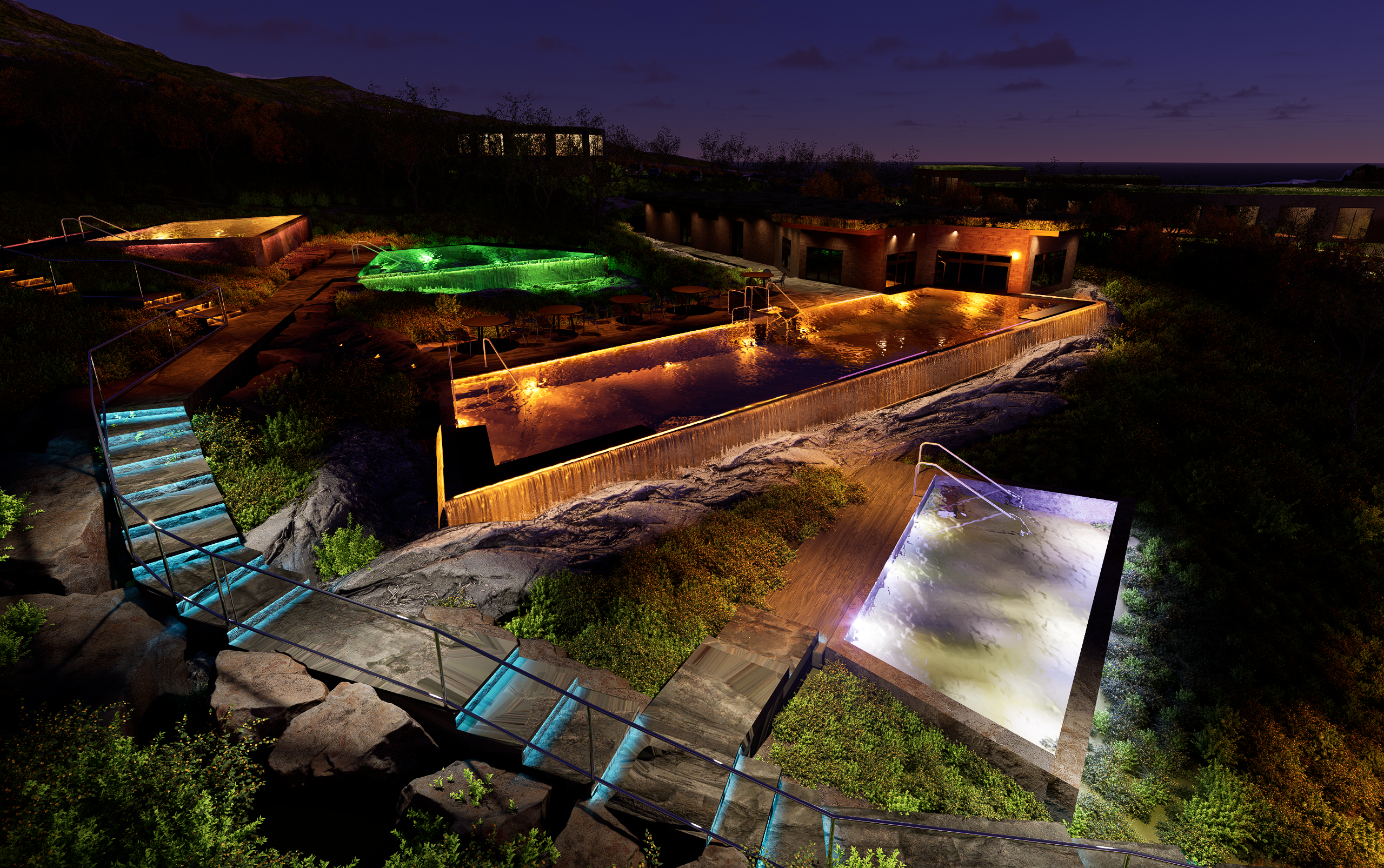
 translation below
What makes Icelandic geothermal pools so special?
Iceland’s geothermal pools are a product of the country’s unique geology. Water heated deep underground is mixed with cold water to set temperatures between 36–42°C — perfect for soaking, but also a warm, nutrient-rich environment in which bacteria can multiply quickly. Unlike outdoor seawater beaches or cold freshwater lakes, a warm pool with dozens of bathers needs active water quality management.
In most countries around the world, this is solved with chlorine and other chemical disinfectants. In Iceland, chemicals are explicitly prohibited in natural bathing facilities under Regulation No. 460/2015 (Reglugerð um baðstaði í náttúrunni). That is what makes Icelandic geothermal bathing culture genuinely different — and what makes the engineering challenge so interesting.
What does Icelandic law require instead?
The traditional solution used across Iceland is straightforward and effective, but also very resource-intensive: replace 30–40% of the pool’s total water volume every single day. Fresh cold water and geothermal hot water are continuously mixed in and the “old” water is flushed out — millions of litres of heated water discharged daily into drainage ditches.
The relevant law, Regulation No. 460/2015, classifies natural bathing facilities and sets bacterial count limits (e.g. E. coli < 500/100 ml; Enterococci < 200/100 ml for Class 1 facilities). The regulation requires:
- A minimum of 10 water samples per year for Class 1 facilities (like ours)
- An internal control system with risk assessments, incident logs, and staff training
- A documented emergency and contingency plan
- Strict bather number controls
- Mandatory signage, changing rooms, showers, and first aid on site
The regulation is outcome-based, not technology-prescriptive — meaning it sets the results you must achieve, not the method you must use. This is the regulatory opening that Hugarró’s engineering approach is built on.
What category does Hugarró fall under?
Hugarró is classified as a Recreation Pool (Afþreyingarlaug) — Class 1 — under Regulation 460/2015. This is the highest level of oversight, applying to facilities that operate regularly and year-round. It requires a full operating licence (starfsleyfi) from the local Health Committee, comprehensive internal controls, and continuous compliance with bacterial quality standards.
We welcome this level of scrutiny. Our systems are designed to far exceed Class 1 requirements, not merely meet them.
Why are chemicals not used — and why is that actually fine?
Chemicals such as chlorine kill bacteria effectively, but they have a serious downside: they react with organic matter introduced by bathers (sweat, skin cells, urine) to produce disinfection by-products (DBPs) — compounds that are themselves potentially harmful and are responsible for the characteristic “pool smell” most people associate with indoor public pools. In Iceland, the law simply prohibits them in natural bathing facilities.
The good news is that, as research has demonstrated, chemicals are not actually necessary if you control the source of contamination and treat the water effectively through physical methods.
What does the science say? The Keuten/Delft Study
Researcher M.C. Keuten at Delft University of Technology published a landmark study on bacterial pollution in swimming pools and how to reduce it — *Alternative Pool Water Treatment and the Influence of Swimmers on Water Quality*.
The study used a specially instrumented shower cabin to precisely measure the pollutants released by bathers before and during swimming. The key findings are striking:
| Source of bacterial/pollutant load | Share of total |
|---|---|
| Submerged sweating during swimming | ~40% |
| Not showering before entering the pool | ~30% |
| Not using the toilet before entering the pool | ~30% |
This means that up to 60% of the bacterial input into a pool is directly controllable through bather behaviour — before any filtration or treatment technology is even needed. This is something Icelanders know well, which is why the country has a very strict pre-bath showering culture.
Keuten also demonstrated that UV disinfection combined with ultrafiltration — with no chemicals — can achieve microbial water quality comparable to chlorinated pools. Biological filtration further improved the removal of dissolved substances such as urea, reducing the formation of unwanted by-products.
What does Hugarró do to reduce bacterial input at the source?
Based directly on Keuten’s research, Hugarró has designed a two-step pre-entry protocol backed by technology, not just signage:
- Mandatory pre-swim shower — Our facilities use sensor-based nudging technology that confirms a minimum 1.5 minutes of showering before entry is unlocked. This alone eliminates approximately 30% of the bacterial load that would otherwise enter the pool. A visible timer shows the bather how much time is left.
- Toilet-first culture — Clear prompts, facility design, and staff communication encourage guests to use the toilet before bathing — targeting the remaining 30% of avoidable bacterial input.
Across our 7 pools, strict bather number limits are enforced in real time, both to comply with the regulatory requirement for access control and to ensure that the filtration system is never overwhelmed.
How does Hugarró manage water quality without chemicals and without massive water waste?
Instead of continuously flushing out large volumes of water, Hugarró’s pools are equipped with continuous ultrafiltration — a physical membrane-based process that removes bacteria, particles, and micro-organisms from pool water in a closed loop. This is combined with continuous water quality monitoring using systems such as those developed by bNovate, which allows near-real-time measurement of bacterial counts.
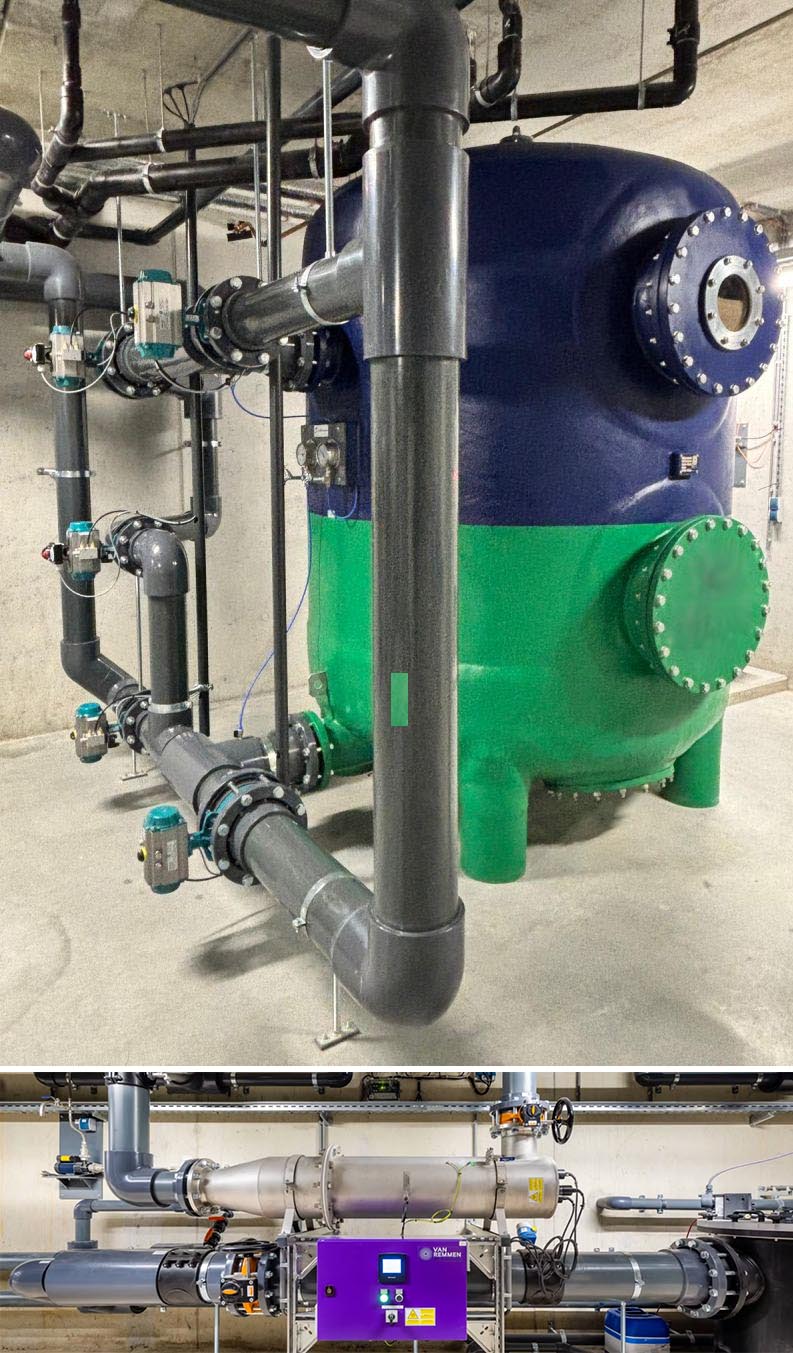 The result:
-
- Water savings of over 90% compared to the traditional daily-replacement model used elsewhere in Iceland
- Energy savings of over 30% in heating, as far less cold replacement water needs to be heated
- Pool water that can be cycled to within safe bacteriological limits within one hour if needed — compared to the days it would take under a simple dilution/replacement model
Why ultrafiltration alone is not enough — the role of the active carbon biofilter
Ultrafiltration is highly effective at removing bacteria, viruses, and suspended particles from pool water. However, it has one fundamental limitation: its membranes work by physical size exclusion, and the pores are far too large to capture dissolved molecules. Urea — the primary dissolved contaminant in sweat and urine — is a small molecule (~0.4 nm) that passes straight through a UF membrane unimpeded.
This matters particularly in a geothermal pool at 38°C. At that temperature, the water is warmer than the human body’s cooling threshold, meaning that bathers sweat continuously and passively, even while sitting still. Research has measured sweat secretion of over 500 ml per person per hour during passive immersion at this temperature. Urea accumulates in the water with every bather, every session, every day — and UF does nothing to stop it.
To address this, Hugarró’s filtration system includes a biological active carbon filter. Granular activated carbon (GAC) offers an extraordinarily large internal surface area — hundreds of square metres per gram — on which both physical adsorption and biological degradation take place simultaneously:
- Adsorption: urea and other dissolved organic compounds bind chemically to the carbon surface and are removed from the water
- Biodegradation: beneficial micro-organisms colonise the carbon medium and break down the adsorbed organic matter into harmless compounds
This dual mechanism makes active carbon significantly more effective than alternative biological media such as MBBR carriers (moving bed biofilm reactors), which rely on biological action alone and offer no adsorption capacity. In a chemical-free system with clean fill water, active carbon can dedicate its full adsorption capacity exclusively to the dissolved substances introduced by bathers — making it the ideal complement to ultrafiltration.
Together, UF and the active carbon biofilter cover what neither can achieve alone: UF handles pathogens and particles; the biofilter handles dissolved organics. The result is pool water that is clean in every meaningful sense of the word.
Does Hugarró have any water replacement at all?
Yes — a small amount. Natural evaporation from the pool surface means that water is slowly lost and must be topped up. This amounts to less than 10% of pool volume per day — a fraction of the 30–40% daily replacement that is standard practice at comparable Icelandic geothermal pools. This replacement water is part of the natural water cycle, not a deliberate “flush-and-refill” approach.and-refill” approach.
How does Hugarró monitor water quality — and how does this compare to the law?
The law requires a minimum of 10 water quality checks per year for Class 1 facilities — roughly once per month. At Hugarró, we check every pool every 2 hours, using continuous real-time monitoring technology. This means:
| Parameter | Legal minimum (Class 1) | Hugarró standard |
|---|---|---|
| Water quality sampling frequency | 10×/year (~monthly) | Every 2 hours |
| Response time to exceedance | Days (lab turnaround) | Within 1 hour (automated filtration response) |
| Bather number enforcement | Required, method unspecified | Real-time sensor-based control per pool |
Any exceedance of our internal quality thresholds triggers an automated filtration response. Our systems are designed to restore water to within safe parameters within one hour — even under peak load. In fact, the moment bacterial quality moves from the ‘green’ to the ‘yellow’ zone, we increase filtration on the pool in question to prevent it from ever reaching the ‘red’ zone.
Moreover, our system can be remotely monitored via online dashboards by the health authorities — providing real-time oversight rather than after-the-fact sampling during a site visit.
Other measures to assure water quality
An important part of our quality control system is pool design. By creating overflow around all pool edges, the formation of a bacterial biofilm on the water surface is minimised. Pool surfaces are smoother than standard concrete pool surfaces, which greatly reduces the build-up of deposits that are a breeding ground for bacterial growth, and allows easy cleaning.
Water flow through the pools — comprising evaporation replacement water as well as heated water inflow — is carefully engineered to avoid stagnant areas, which can lead to bacterial development. This is the principle behind the ‘islands’ in our pools: filtered water enters via the bottom of the pool and rises upward, flowing over the edges and carrying any contamination with it. This creates a continuously circulating cycle, carefully monitored by automation.
Are there any rules in Iceland that prohibit ultrafiltration?
No. Regulation 460/2015 contains no prohibition on ultrafiltration. The regulation is outcome-based — it sets bacterial limits and requires that a documented internal control system is in place. It does not prescribe which technology must be used to achieve those limits.
The regulation does describe the standard model for recreation pools as relying on “frequent water renewal and bather number control” — which is how the traditional approach is framed. However, since the law is outcome-focused, an alternative method that demonstrably achieves the same (or better) bacteriological outcomes is legally defensible.
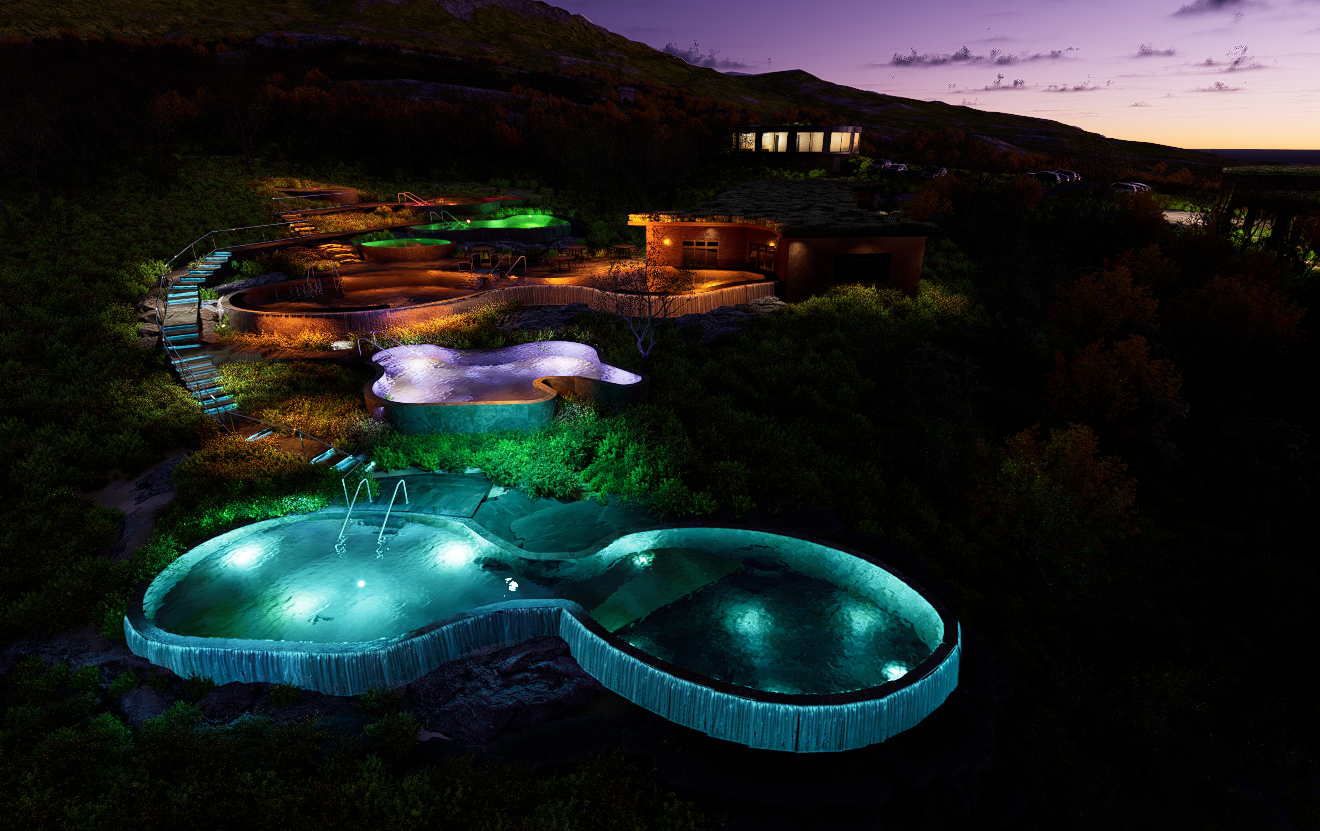
Hugarró engages proactively with the local Health Committee to ensure our approach is fully documented, understood, and approved as part of our operating licence conditions. This regulatory dialogue will be an ongoing part of our operations and we hope to set an example for bacterial water control in Iceland.
What does the local Health Committee inspect?
The local Health Committee (heilbrigðisnefnd) holds broad powers under Regulation 460/2015 and the underlying Public Health Act No. 7/1998:
- Unrestricted access for inspections and water sampling at any time
- Power to issue public warnings and erect warning signs if bacterial limits are repeatedly exceeded
- Power to cap the number of bathers in a recreation pool
- Power to order additional sampling beyond the minimum (at the operator’s cost)
- Power to authorise or order disinfection — only by radiation or other non-chemical means — if quality standards are repeatedly not met
All of Hugarró’s water quality results — as required — are forwarded to the Environment Agency of Iceland (Umhverfisstofnun), where they are published publicly. We are confident in our results and welcome public transparency.
The bottom line
Hugarró operates at the intersection of Icelandic bathing culture, environmental responsibility, and evidence-based water science. We comply fully with Regulation No. 460/2015 as a Class 1 Recreation Pool — and go significantly further in every measurable dimension of water safety, resource efficiency, and monitoring rigour.
Our approach is not a workaround. It is what responsible geothermal bathing looks like when engineering and science are applied seriously to an age-old challenge
Click to enlarge
Íslenskar reglugerðir um böðun í náttúrunni
Íslenskar reglugerðir um böðun í náttúrunni
og hvernig Hugarró fer langt fram úr þeim
Hvað gerir íslenskar jarðhitalaugar einstakar — og hvað þarf til að halda þeim öruggum, sjálfbærum og náttúrulegum á sama tíma?

Hvað gerir íslenskar jarðhitalaugar svona sérstakar?
Íslenskar jarðhitalaugar eru afurð einstakrar jarðfræði landsins. Vatni sem hitnar djúpt í jörðu er blandað við kalt vatn til að ná 36–42°C hita — fullkomið til að láta fara vel um sig, en jafnframt hlýtt og næringarríkt umhverfi þar sem bakteríur geta fjölgað sér hratt. Ólíkt sjávarströndum eða köldum ferskvatnsstöðum þarf hlý laug með tugum gesta virka stjórnun á vatnsgæðum.
Í flestum löndum heims er þetta leyst með klór og öðrum sótthreinsiefnum. Á Íslandi eru kemísk efni beinlínis bönnuð á náttúrulegum baðstöðum samkvæmt Reglugerð nr. 460/2015 (Reglugerð um baðstaði í náttúrunni). Það er það sem gerir íslenska baðmenningu sannarlega frábrugðna — og gerir verkfræðilegu áskorunina svo áhugaverða.
Hvað krefjast íslensk lög í staðinn?
Hefðbundna lausnin sem notuð er um allt Ísland er einföld og áhrifarík, en jafnframt mjög auðlindafrek: skipta út 30–40% af heildarvatnsmagni laugarinnar á hverjum einasta degi. Fersku köldu vatni og heitu jarðhitavatni er stöðugt blandað saman og „gamla“ vatninu skolað út — milljónir lítra af hituðu vatni renna daglega í frárennslisskurði.
Viðeigandi lög, Reglugerð nr. 460/2015, flokka náttúruleg baðsvæði og setja mörk fyrir gerlafjölda (t.d. E. coli < 500/100 ml; Enterokokkar < 200/100 ml fyrir flokk 1). Reglugerðin krefst:
- Að lágmarki 10 vatnssýni á ári fyrir mannvirki í flokki 1 (eins og okkar)
- Innra eftirlitskerfi með áhættumati, atvikaskráningu og þjálfun starfsfólks
- Skráð neyðar- og viðbragðsáætlun
- Strangt eftirlit með fjölda baðgesta
- Skyldubundnar merkingar, búningsklefar, sturtur og skyndihjálp á staðnum
Reglugerðin er árangursmiðuð, ekki tækniforskrift — sem þýðir að hún setur fram þá niðurstöðu sem þarf að ná, en ekki hvaða aðferð þarf að nota. Þetta er reglugerðaropnunin sem verkfræðileg nálgun Hugarró byggir á.
Undir hvaða flokk fellur Hugarró?
Hugarró er flokkað sem Afþreyingarlaug (Afþreyingarlaug) — Flokkur 1 — samkvæmt reglugerð 460/2015. Þetta er hæsta stig eftirlits og á við um mannvirki sem starfrækt eru reglulega og allt árið um kring. Það krefst fulls starfsleyfis frá heilbrigðisnefnd sveitarfélagsins, yfirgripsmikils innra eftirlits og stöðugrar fylgni við gæðastaðla fyrir gerla.starfsleyfistarfsleyfi
Við fögnum þessu eftirliti. Kerfin okkar eru hönnuð til að fara langt fram úr kröfur í flokki 1 ríflega, en ekki bara uppfylla þær.
Af hverju eru engin kemísk efni notuð — og af hverju er það í raun í lagi?
Efni eins og klór drepa bakteríur á áhrifaríkan hátt, en þeim fylgir alvarlegur galli: þau hvarfast við lífræn efni sem berast með sundgestum (svita, húðfrumum, þvagi) og mynda aukaafurðir sótthreinsunar (DBP) — efnasambönd sem geta sjálf verið skaðleg og bera ábyrgð á hinni dæmigerðu „sundlaugalykt“ sem flestir tengja við almenningslaugar innanhúss. Á Íslandi banna lög þessi efni einfaldlega í náttúrulegum baðstöðum.
Góðu fréttirnar eru þær að rannsóknir hafa sýnt að kemísk efni eru í raun óþörf ef stjórnað er upptökum mengunar og vatnið meðhöndlað á áhrifaríkan hátt með eðlisfræðilegum aðferðum.
Hvað segja vísindin? Keuten/Delft rannsóknin
Rannsakandinn M.C. Keuten við Tækniháskólann í Delft birti tímamótarannsókn á bakteríumengun í sundlaugum og hvernig megi draga úr henni — *Alternative Pool Water Treatment and the Influence of Swimmers on Water Quality*.
Í rannsókninni var notaður sérútbúinn sturtuklefi til að mæla nákvæmlega þau mengunarefni sem losna frá sundgestum fyrir og á meðan þeir synda. Helstu niðurstöður eru sláandi:
| Upptök bakteríu- og mengunarálags | Hlutfall af heild |
|---|---|
| Svitamyndun í kafi á meðan sundi | ~40% |
| Að fara ekki í sturtu áður en farið er í laugina | ~30% |
| Að nota ekki salernið áður en farið er í laugina | ~30% |
Þetta þýðir að hægt er að stjórna allt að 60% af bakteríumagni sem berst í laug beint með hegðun gesta — áður en nokkur síunar- eða hreinsitækni er yfirhöfuð nauðsynleg. Þetta er eitthvað sem Íslendingar þekkja vel, og þess vegna ríkir hér á landi mjög ströng menning varðandi sturtuferðir fyrir sund.
Keuten sýndi einnig fram á að UV-sótthreinsun ásamt ofursíun (ultrafiltration) — án nokkurra íðefna — getur náð fram örverufræðilegum vatnsgæðum sem eru sambærileg við klóraðar laugar. Líffræðileg síun bætti enn frekar fjarlægingu uppleystra efna eins og þvagefnis, sem dregur úr myndun óæskilegra aukaafurða.
Hvað gerir Hugarró til að draga úr bakteríumagni við upptökin?
Byggt beint á rannsóknum Keuten, hefur Hugarró hannað tveggja þrepa aðgangsferli sem studd er af tækni, ekki bara skiltum:
- Skyldubundin sturta fyrir sund — Aðstaða okkar notar skynjaratækni sem hvetur gesti og staðfestir að lágmarki 1,5 mínútna sturtuferð áður en opnað er fyrir aðgang. Þetta eitt og sér eyðir um það bil 30% af því bakteríumagni sem annars myndi berast í laugina. Sýnilegur tímamælir sýnir gestinum hversu mikill tími er eftir.
- Salernismenning í fyrirrúmi — Skýrar ábendingar, hönnun aðstöðunnar og samskipti starfsfólks hvetja gesti til að nota salernið fyrir sundferðina — sem beinist að þeim 30% af forðanlegu bakteríumagni sem eftir standa.
Í okkar 7 laugum, er ströngum takmörkunum á fjölda gesta fylgt eftir í rauntíma, bæði til að uppfylla reglugerðarkröfur um aðgangsstýringu og til að tryggja að síunarkerfið verði aldrei ofhlaðið.
Hvernig stýrir Hugarró vatnsgæðum án íðefna og án gífurlegrar vatnssóunar?
Í stað þess að skola stöðugt út miklu magni af vatni, eru laugar Hugarró búnar samfelldri ofursíun — eðlisfræðilegu ferli byggðu á himnum sem fjarlægir bakteríur, agnir og örverur úr laugavatninu í lokaðri hringrás. Þessu er fylgt eftir með stöðugri vöktun á vatnsgæðum með kerfum eins og þeim sem þróuð eru af bNovate, sem gerir kleift að mæla bakteríufjölda nánast í rauntíma.
 Niðurstaðan:
-
- Yfir 90% vatnssparnaður miðað við hefðbundna líkanið þar sem vatni er skipt út daglega eins og annars staðar á Íslandi
- Yfir 30% orkusparnaður í upphitun, þar sem hita þarf mun minna af köldu ferskvatni
- Laugavatn sem hægt er að hreinsa upp að öruggum gerlamörkum innan klukkustundar ef þörf krefur — samanborið við þá marga daga sem það tæki með einfaldri útskiptingu vatns
Af hverju ofursíun ein og sér dugar ekki — hlutverk lífvirkrar kolsíu
Ofursíun er mjög áhrifarík við að fjarlægja bakteríur, vírusa og svifagnir úr sundlaugarvatni. Hún hefur þó eina grundvallartakmörkun: himnurnar virka með eðlisfræðilegri stærðarsíun og svitaholurnar eru allt of stórar til að fanga uppleystar sameindir.Þvagefni — helsta uppleysta mengunarefnið í svita og þvagi — er lítil sameind (~0,4 nm) sem fer óhindrað beint í gegnum ofursíunarhimnu.
Þetta skiptir sérstaklega miklu máli í jarðhitalaug sem er 38°C heit. Við það hitastig er vatnið heitara en kæliþröskuldur mannslíkamans, sem þýðir að baðgestir svitna stöðugt og ómeðvitað, jafnvel þótt þeir sitji kyrrir. Rannsóknir hafa mælt svitamyndun yfir 500 ml á mann á klukkustund við óvirka dvöl í vatni við þetta hitastig. Þvagefni safnast upp í vatninu með hverjum gesti, hverri baðferð, á hverjum degi — og ofursíun gerir ekkert til að stöðva það.
Til að bregðast við þessu inniheldur síunarkerfi Hugarró lífvirka kolsíu. Virkt kornakol (GAC) býður upp á óvenju stórt innra yfirborð — mörg hundruð fermetra á hvert gramm — þar sem bæði eðlisfræðileg ásog og líffræðileg niðurbrot eiga sér stað samtímis:
- Ásog: þvagefni og önnur uppleyst lífræn efnasambönd bindast efnafræðilega við yfirborð kolsins og eru fjarlægð úr vatninu
- Líffræðilegt niðurbrot: gagnlegar örverur setjast að í kolefninu og brjóta niður ásoguð lífræn efni í skaðlaus efnasambönd
Þetta tvíþætta ferli gerir virkt kol mun skilvirkara en önnur líffræðileg síuefni eins og MBBR-berar (skolpsíur með hreyfanlegu undirlagi), sem treysta eingöngu á líffræðilega virkni og hafa enga ásogsgetu. Í efnalausu kerfi með hreinu fyllivatni getur virka kolið nýtt alla ásogsgetu sína eingöngu fyrir þau uppleystu efni sem berast með baðgestum — sem gerir það að fullkominni viðbót við ofursíun.
Saman ná UF og virka kolefnis-lífsían því sem hvorugt getur áorkað eitt og sér: UF sér um sýkla og agnir; lífsían sér um uppleyst lífræn efni. Niðurstaðan er sundlaugarvatn sem er hreint í fyllsta skilningi þess orðs.
Er einhver vatnsskipti yfirhöfuð hjá Hugarró?
Já — lítið magn. Náttúruleg uppgufun af yfirborði laugarinnar þýðir að vatn tapast hægt og rólega og þarf að fylla á hana. Þetta nemur minna en 10% af rúmmáli laugarinnar á dag — broti af þeim 30–40% daglegu vatnsskiptum sem eru venjubundin í sambærilegum íslenskum jarðhitalaugum. Þetta áfyllingarvatn er hluti af náttúrulegri hringrás vatnsins, ekki meðvituð „tæma-og-fylla“ nálgun.
Hvernig vaktar Hugarró vatnsgæði — og hvernig er það í samanburði við lög?
Lögin krefjast að lágmarki 10 mælingar á vatnsgæðum á ári fyrir flokk 1 — u.þ.b. einu sinni í mánuði. Hjá Hugarró athugum við hverja laug á 2 klukkustunda fresti, með því að nota tækni sem vaktar vatnið stöðugt í rauntíma. Þetta þýðir:
| Mælistærð | Lagalegt lágmark (Flokkur 1) | Hugarró staðall |
|---|---|---|
| Tíðni sýnatöku á vatnsgæðum | 10× á ári (~mánaðarlega) | Á 2 klukkustunda fresti |
| Viðbragðstími við frávikum | Dagar (bið eftir rannsóknarstofu) | Innan 1 klukkustundar (sjálfvirkt viðbragð síunarkerfis) |
| Eftirlit með fjölda gesta | Skylt, aðferð ekki tilgreind | Rauntíma eftirlit með skynjurum í hverri laug |
Öll frávik frá okkar innri gæðaviðmiðum ræsa sjálfvirkt viðbragð í síunarkerfinu. Kerfin okkar eru hönnuð til að koma vatninu aftur innan öruggra marka innan klukkustundar — jafnvel við hámarksálag. Í raun, um leið og bakteríugæði færast úr „græna“ svæðinu yfir í það „gula“, aukum við síun í viðkomandi laug til að koma í veg fyrir að hún nái nokkurn tímann í „rauða“ svæðið.
Auk þess geta heilbrigðisyfirvöld fylgst með kerfinu okkar í gegnum mælaborð á netinu — sem veitir rauntímaeftirlit í stað sýnatöku eftir á við vettvangsheimsókn.
Aðrar ráðstafanir til að tryggja vatnsgæði
Mikilvægur hluti af gæðaeftirlitskerfi okkar er hönnun lauganna. Með því að hafa yfirfall meðfram öllum laugarköntum er myndun örveruskánar á yfirborði vatnsins lágmörkuð. Yfirborð lauganna er sléttara en á hefðbundnum steyptum laugum, sem dregur verulega úr útfellingum sem eru gróðrarstía fyrir bakteríuvöxt og auðveldar þrif.
Vatnsrennsli í gegnum laugarnar — sem samanstendur af vatni til að mæta uppgufun ásamt innrennsli á heitu vatni — er vandlega hannað til að forðast kyrrstöðusvæði þar sem bakteríur geta þrifist. Þetta er meginreglan á bak við „eyjarnar“ í laugunum okkar: síað vatn kemur inn um botn laugarinnar og stígur upp, flæðir yfir kanta og ber með sér hvers kyns óhreinindi. Þetta skapar stöðuga hringrás sem er vandlega vöktuð með sjálfvirkni.
Eru einhverjar reglur á Íslandi sem banna ofursíun?
Nei. Reglugerð 460/2015 inniheldur ekkert bann við ofursíun. Reglugerðin er árangursmiðuð — hún setur mörk fyrir gerlafjölda og krefst þess að skjalfest innra eftirlitskerfi sé til staðar. Hún kveður ekki á um hvaða tækni skuli nota til að ná þeim mörkum.
Reglugerðin lýsir staðallíkani fyrir baðstaði sem byggir á „tíðri endurnýjun vatns og takmörkun á fjölda baðgesta“ — sem er hefðbundna nálgunin. Hins vegar, þar sem lögin einblína á niðurstöður, er önnur aðferð sem sýnanlega nær sömu (eða betri) niðurstöðum varðandi gerlafjölda lagalega verjanleg.

Hugarró á í virku samstarfi við Heilbrigðisnefnd til að tryggja að nálgun okkar sé fyllilega skjalfest, skilin og samþykkt sem hluti af starfsleyfisskilyrðum okkar. Þetta samtal við eftirlitsaðila verður áframhaldandi hluti af starfsemi okkar og við vonumst til að vera fyrirmynd í bakteríustjórnun vatns á Íslandi.
Hvað skoðar heilbrigðisnefndin?
Heilbrigðisnefnd (heilbrigðisnefnd) hefur víðtækar heimildir samkvæmt reglugerð nr. 460/2015 og undirliggjandi lögum um hollustuhætti og mengunarvarnir nr. 7/1998:
- Ótakmarkaður aðgangur vegna eftirlits og sýnatöku hvenær sem er
- Heimild til að gefa út opinberar viðvaranir og setja upp viðvörunarskilti ef gerlamörk eru ítrekað yfir mörkum
- Heimild til að takmarka fjölda baðgesta á baðstað
- Heimild til að fyrirskipa aukna sýnatöku umfram lágmark (á kostnað rekstraraðila)
- Heimild til að heimila eða fyrirskipa sótthreinsun — eingöngu með geislun eða öðrum aðferðum án íblöndunarefna — ef gæðakröfur eru ítrekað ekki uppfylltar
Öllum niðurstöðum úr mælingum á vatnsgæðum Hugarró er — eins og krafist er — miðlað til Umhverfisstofnun (Umhverfisstofnun), þar sem þær eru birtar opinberlega. Við treystum okkar niðurstöðum og fögnum gagnsæi gagnvart almenningi.
Kjarni málsins
Hugarró starfar á mótum íslenskrar baðmenningar, umhverfisábyrgðar og gagnreyndra vatnsvísinda. Við fylgjum reglugerð nr. 460/2015 að fullu sem flokkur 1 fyrir afþreyingarlaugar — og göngum mun lengra á öllum mælanlegum sviðum vatnsöryggis, auðlindanýtingar og eftirlits.
Nálgun okkar er ekki undanleið. Svona lítur ábyrg jarðhitabaðmenning út þegar verkfræði og vísindum er beitt af alvöru við forna áskorun
Environment
and how Hugarró goes far beyond them
What makes geothermal pools in Iceland unique — and what does it take to keep them safe, sustainable, and natural at the same time?
translation below
What makes Icelandic geothermal pools so special?
Iceland’s geothermal pools are a product of the country’s unique geology. Water heated deep underground is mixed with cold water to set temperatures between 36–42°C — perfect for soaking, but also a warm, nutrient-rich environment in which bacteria can multiply quickly. Unlike outdoor seawater beaches or cold freshwater lakes, a warm pool with dozens of bathers needs active water quality management.
In most countries around the world, this is solved with chlorine and other chemical disinfectants. In Iceland, chemicals are explicitly prohibited in natural bathing facilities under Regulation No. 460/2015 (Reglugerð um baðstaði í náttúrunni). That is what makes Icelandic geothermal bathing culture genuinely different — and what makes the engineering challenge so interesting.
What does Icelandic law require instead?
The traditional solution used across Iceland is straightforward and effective, but also very resource-intensive: replace 30–40% of the pool’s total water volume every single day. Fresh cold water and geothermal hot water are continuously mixed in and the “old” water is flushed out — millions of litres of heated water discharged daily into drainage ditches.
The relevant law, Regulation No. 460/2015, classifies natural bathing facilities and sets bacterial count limits (e.g. E. coli < 500/100 ml; Enterococci < 200/100 ml for Class 1 facilities). The regulation requires:
- A minimum of 10 water samples per year for Class 1 facilities (like ours)
- An internal control system with risk assessments, incident logs, and staff training
- A documented emergency and contingency plan
- Strict bather number controls
- Mandatory signage, changing rooms, showers, and first aid on site
The regulation is outcome-based, not technology-prescriptive — meaning it sets the results you must achieve, not the method you must use. This is the regulatory opening that Hugarró’s engineering approach is built on.
What category does Hugarró fall under?
Hugarró is classified as a Recreation Pool (Afþreyingarlaug) — Class 1 — under Regulation 460/2015. This is the highest level of oversight, applying to facilities that operate regularly and year-round. It requires a full operating licence (starfsleyfi) from the local Health Committee, comprehensive internal controls, and continuous compliance with bacterial quality standards.
We welcome this level of scrutiny. Our systems are designed to far exceed Class 1 requirements, not merely meet them.
Why are chemicals not used — and why is that actually fine?
Chemicals such as chlorine kill bacteria effectively, but they have a serious downside: they react with organic matter introduced by bathers (sweat, skin cells, urine) to produce disinfection by-products (DBPs) — compounds that are themselves potentially harmful and are responsible for the characteristic “pool smell” most people associate with indoor public pools. In Iceland, the law simply prohibits them in natural bathing facilities.
The good news is that, as research has demonstrated, chemicals are not actually necessary if you control the source of contamination and treat the water effectively through physical methods.
What does the science say? The Keuten/Delft Study
Researcher M.C. Keuten at Delft University of Technology published a landmark study on bacterial pollution in swimming pools and how to reduce it — *Alternative Pool Water Treatment and the Influence of Swimmers on Water Quality*.
The study used a specially instrumented shower cabin to precisely measure the pollutants released by bathers before and during swimming. The key findings are striking:
| Source of bacterial/pollutant load | Share of total |
|---|---|
| Submerged sweating during swimming | ~40% |
| Not showering before entering the pool | ~30% |
| Not using the toilet before entering the pool | ~30% |
This means that up to 60% of the bacterial input into a pool is directly controllable through bather behaviour — before any filtration or treatment technology is even needed. This is something Icelanders know well, which is why the country has a very strict pre-bath showering culture.
Keuten also demonstrated that UV disinfection combined with ultrafiltration — with no chemicals — can achieve microbial water quality comparable to chlorinated pools. Biological filtration further improved the removal of dissolved substances such as urea, reducing the formation of unwanted by-products.
What does Hugarró do to reduce bacterial input at the source?
Based directly on Keuten’s research, Hugarró has designed a two-step pre-entry protocol backed by technology, not just signage:
- Mandatory pre-swim shower — Our facilities use sensor-based nudging technology that confirms a minimum 1.5 minutes of showering before entry is unlocked. This alone eliminates approximately 30% of the bacterial load that would otherwise enter the pool. A visible timer shows the bather how much time is left.
- Toilet-first culture — Clear prompts, facility design, and staff communication encourage guests to use the toilet before bathing — targeting the remaining 30% of avoidable bacterial input.
Across our 7 pools, strict bather number limits are enforced in real time, both to comply with the regulatory requirement for access control and to ensure that the filtration system is never overwhelmed.
How does Hugarró manage water quality without chemicals and without massive water waste?
Instead of continuously flushing out large volumes of water, Hugarró’s pools are equipped with continuous ultrafiltration — a physical membrane-based process that removes bacteria, particles, and micro-organisms from pool water in a closed loop. This is combined with continuous water quality monitoring using systems such as those developed by bNovate, which allows near-real-time measurement of bacterial counts.
The result:
-
- Water savings of over 90% compared to the traditional daily-replacement model used elsewhere in Iceland
- Energy savings of over 30% in heating, as far less cold replacement water needs to be heated
- Pool water that can be cycled to within safe bacteriological limits within one hour if needed — compared to the days it would take under a simple dilution/replacement model
Why ultrafiltration alone is not enough — the role of the active carbon biofilter
Ultrafiltration is highly effective at removing bacteria, viruses, and suspended particles from pool water. However, it has one fundamental limitation: its membranes work by physical size exclusion, and the pores are far too large to capture dissolved molecules. Urea — the primary dissolved contaminant in sweat and urine — is a small molecule (~0.4 nm) that passes straight through a UF membrane unimpeded.
This matters particularly in a geothermal pool at 38°C. At that temperature, the water is warmer than the human body’s cooling threshold, meaning that bathers sweat continuously and passively, even while sitting still. Research has measured sweat secretion of over 500 ml per person per hour during passive immersion at this temperature. Urea accumulates in the water with every bather, every session, every day — and UF does nothing to stop it.
To address this, Hugarró’s filtration system includes a biological active carbon filter. Granular activated carbon (GAC) offers an extraordinarily large internal surface area — hundreds of square metres per gram — on which both physical adsorption and biological degradation take place simultaneously:
- Adsorption: urea and other dissolved organic compounds bind chemically to the carbon surface and are removed from the water
- Biodegradation: beneficial micro-organisms colonise the carbon medium and break down the adsorbed organic matter into harmless compounds
This dual mechanism makes active carbon significantly more effective than alternative biological media such as MBBR carriers (moving bed biofilm reactors), which rely on biological action alone and offer no adsorption capacity. In a chemical-free system with clean fill water, active carbon can dedicate its full adsorption capacity exclusively to the dissolved substances introduced by bathers — making it the ideal complement to ultrafiltration.
Together, UF and the active carbon biofilter cover what neither can achieve alone: UF handles pathogens and particles; the biofilter handles dissolved organics. The result is pool water that is clean in every meaningful sense of the word.
Does Hugarró have any water replacement at all?
Yes — a small amount. Natural evaporation from the pool surface means that water is slowly lost and must be topped up. This amounts to less than 10% of pool volume per day — a fraction of the 30–40% daily replacement that is standard practice at comparable Icelandic geothermal pools. This replacement water is part of the natural water cycle, not a deliberate “flush-and-refill” approach.and-refill” approach.
How does Hugarró monitor water quality — and how does this compare to the law?
The law requires a minimum of 10 water quality checks per year for Class 1 facilities — roughly once per month. At Hugarró, we check every pool every 2 hours, using continuous real-time monitoring technology. This means:
| Parameter | Legal minimum (Class 1) | Hugarró standard |
|---|---|---|
| Water quality sampling frequency | 10×/year (~monthly) | Every 2 hours |
| Response time to exceedance | Days (lab turnaround) | Within 1 hour (automated filtration response) |
| Bather number enforcement | Required, method unspecified | Real-time sensor-based control per pool |
Any exceedance of our internal quality thresholds triggers an automated filtration response. Our systems are designed to restore water to within safe parameters within one hour — even under peak load. In fact, the moment bacterial quality moves from the ‘green’ to the ‘yellow’ zone, we increase filtration on the pool in question to prevent it from ever reaching the ‘red’ zone.
Moreover, our system can be remotely monitored via online dashboards by the health authorities — providing real-time oversight rather than after-the-fact sampling during a site visit.
Other measures to assure water quality
An important part of our quality control system is pool design. By creating overflow around all pool edges, the formation of a bacterial biofilm on the water surface is minimised. Pool surfaces are smoother than standard concrete pool surfaces, which greatly reduces the build-up of deposits that are a breeding ground for bacterial growth, and allows easy cleaning.
Water flow through the pools — comprising evaporation replacement water as well as heated water inflow — is carefully engineered to avoid stagnant areas, which can lead to bacterial development. This is the principle behind the ‘islands’ in our pools: filtered water enters via the bottom of the pool and rises upward, flowing over the edges and carrying any contamination with it. This creates a continuously circulating cycle, carefully monitored by automation.
Are there any rules in Iceland that prohibit ultrafiltration?
No. Regulation 460/2015 contains no prohibition on ultrafiltration. The regulation is outcome-based — it sets bacterial limits and requires that a documented internal control system is in place. It does not prescribe which technology must be used to achieve those limits.
The regulation does describe the standard model for recreation pools as relying on “frequent water renewal and bather number control” — which is how the traditional approach is framed. However, since the law is outcome-focused, an alternative method that demonstrably achieves the same (or better) bacteriological outcomes is legally defensible.
Hugarró engages proactively with the local Health Committee to ensure our approach is fully documented, understood, and approved as part of our operating licence conditions. This regulatory dialogue will be an ongoing part of our operations and we hope to set an example for bacterial water control in Iceland.
What does the local Health Committee inspect?
The local Health Committee (heilbrigðisnefnd) holds broad powers under Regulation 460/2015 and the underlying Public Health Act No. 7/1998:
- Unrestricted access for inspections and water sampling at any time
- Power to issue public warnings and erect warning signs if bacterial limits are repeatedly exceeded
- Power to cap the number of bathers in a recreation pool
- Power to order additional sampling beyond the minimum (at the operator’s cost)
- Power to authorise or order disinfection — only by radiation or other non-chemical means — if quality standards are repeatedly not met
All of Hugarró’s water quality results — as required — are forwarded to the Environment Agency of Iceland (Umhverfisstofnun), where they are published publicly. We are confident in our results and welcome public transparency.
The bottom line
Hugarró operates at the intersection of Icelandic bathing culture, environmental responsibility, and evidence-based water science. We comply fully with Regulation No. 460/2015 as a Class 1 Recreation Pool — and go significantly further in every measurable dimension of water safety, resource efficiency, and monitoring rigour.
Our approach is not a workaround. It is what responsible geothermal bathing looks like when engineering and science are applied seriously to an age-old challenge
Click to enlarge
Íslenskar reglugerðir um böðun í náttúrunni
Íslenskar reglugerðir um böðun í náttúrunni
og hvernig Hugarró fer langt fram úr þeim
Hvað gerir íslenskar jarðhitalaugar einstakar — og hvað þarf til að halda þeim öruggum, sjálfbærum og náttúrulegum á sama tíma?
Hvað gerir íslenskar jarðhitalaugar svona sérstakar?
Íslenskar jarðhitalaugar eru afurð einstakrar jarðfræði landsins. Vatni sem hitnar djúpt í jörðu er blandað við kalt vatn til að ná 36–42°C hita — fullkomið til að láta fara vel um sig, en jafnframt hlýtt og næringarríkt umhverfi þar sem bakteríur geta fjölgað sér hratt. Ólíkt sjávarströndum eða köldum ferskvatnsstöðum þarf hlý laug með tugum gesta virka stjórnun á vatnsgæðum.
Í flestum löndum heims er þetta leyst með klór og öðrum sótthreinsiefnum. Á Íslandi eru kemísk efni beinlínis bönnuð á náttúrulegum baðstöðum samkvæmt Reglugerð nr. 460/2015 (Reglugerð um baðstaði í náttúrunni). Það er það sem gerir íslenska baðmenningu sannarlega frábrugðna — og gerir verkfræðilegu áskorunina svo áhugaverða.
Hvað krefjast íslensk lög í staðinn?
Hefðbundna lausnin sem notuð er um allt Ísland er einföld og áhrifarík, en jafnframt mjög auðlindafrek: skipta út 30–40% af heildarvatnsmagni laugarinnar á hverjum einasta degi. Fersku köldu vatni og heitu jarðhitavatni er stöðugt blandað saman og „gamla“ vatninu skolað út — milljónir lítra af hituðu vatni renna daglega í frárennslisskurði.
Viðeigandi lög, Reglugerð nr. 460/2015, flokka náttúruleg baðsvæði og setja mörk fyrir gerlafjölda (t.d. E. coli < 500/100 ml; Enterokokkar < 200/100 ml fyrir flokk 1). Reglugerðin krefst:
- Að lágmarki 10 vatnssýni á ári fyrir mannvirki í flokki 1 (eins og okkar)
- Innra eftirlitskerfi með áhættumati, atvikaskráningu og þjálfun starfsfólks
- Skráð neyðar- og viðbragðsáætlun
- Strangt eftirlit með fjölda baðgesta
- Skyldubundnar merkingar, búningsklefar, sturtur og skyndihjálp á staðnum
Reglugerðin er árangursmiðuð, ekki tækniforskrift — sem þýðir að hún setur fram þá niðurstöðu sem þarf að ná, en ekki hvaða aðferð þarf að nota. Þetta er reglugerðaropnunin sem verkfræðileg nálgun Hugarró byggir á.
Undir hvaða flokk fellur Hugarró?
Hugarró er flokkað sem Afþreyingarlaug (Afþreyingarlaug) — Flokkur 1 — samkvæmt reglugerð 460/2015. Þetta er hæsta stig eftirlits og á við um mannvirki sem starfrækt eru reglulega og allt árið um kring. Það krefst fulls starfsleyfis frá heilbrigðisnefnd sveitarfélagsins, yfirgripsmikils innra eftirlits og stöðugrar fylgni við gæðastaðla fyrir gerla.starfsleyfistarfsleyfi
Við fögnum þessu eftirliti. Kerfin okkar eru hönnuð til að fara langt fram úr kröfur í flokki 1 ríflega, en ekki bara uppfylla þær.
Af hverju eru engin kemísk efni notuð — og af hverju er það í raun í lagi?
Efni eins og klór drepa bakteríur á áhrifaríkan hátt, en þeim fylgir alvarlegur galli: þau hvarfast við lífræn efni sem berast með sundgestum (svita, húðfrumum, þvagi) og mynda aukaafurðir sótthreinsunar (DBP) — efnasambönd sem geta sjálf verið skaðleg og bera ábyrgð á hinni dæmigerðu „sundlaugalykt“ sem flestir tengja við almenningslaugar innanhúss. Á Íslandi banna lög þessi efni einfaldlega í náttúrulegum baðstöðum.
Góðu fréttirnar eru þær að rannsóknir hafa sýnt að kemísk efni eru í raun óþörf ef stjórnað er upptökum mengunar og vatnið meðhöndlað á áhrifaríkan hátt með eðlisfræðilegum aðferðum.
Hvað segja vísindin? Keuten/Delft rannsóknin
Rannsakandinn M.C. Keuten við Tækniháskólann í Delft birti tímamótarannsókn á bakteríumengun í sundlaugum og hvernig megi draga úr henni — *Alternative Pool Water Treatment and the Influence of Swimmers on Water Quality*.
Í rannsókninni var notaður sérútbúinn sturtuklefi til að mæla nákvæmlega þau mengunarefni sem losna frá sundgestum fyrir og á meðan þeir synda. Helstu niðurstöður eru sláandi:
| Upptök bakteríu- og mengunarálags | Hlutfall af heild |
|---|---|
| Svitamyndun í kafi á meðan sundi | ~40% |
| Að fara ekki í sturtu áður en farið er í laugina | ~30% |
| Að nota ekki salernið áður en farið er í laugina | ~30% |
Þetta þýðir að hægt er að stjórna allt að 60% af bakteríumagni sem berst í laug beint með hegðun gesta — áður en nokkur síunar- eða hreinsitækni er yfirhöfuð nauðsynleg. Þetta er eitthvað sem Íslendingar þekkja vel, og þess vegna ríkir hér á landi mjög ströng menning varðandi sturtuferðir fyrir sund.
Keuten sýndi einnig fram á að UV-sótthreinsun ásamt ofursíun (ultrafiltration) — án nokkurra íðefna — getur náð fram örverufræðilegum vatnsgæðum sem eru sambærileg við klóraðar laugar. Líffræðileg síun bætti enn frekar fjarlægingu uppleystra efna eins og þvagefnis, sem dregur úr myndun óæskilegra aukaafurða.
Hvað gerir Hugarró til að draga úr bakteríumagni við upptökin?
Byggt beint á rannsóknum Keuten, hefur Hugarró hannað tveggja þrepa aðgangsferli sem studd er af tækni, ekki bara skiltum:
- Skyldubundin sturta fyrir sund — Aðstaða okkar notar skynjaratækni sem hvetur gesti og staðfestir að lágmarki 1,5 mínútna sturtuferð áður en opnað er fyrir aðgang. Þetta eitt og sér eyðir um það bil 30% af því bakteríumagni sem annars myndi berast í laugina. Sýnilegur tímamælir sýnir gestinum hversu mikill tími er eftir.
- Salernismenning í fyrirrúmi — Skýrar ábendingar, hönnun aðstöðunnar og samskipti starfsfólks hvetja gesti til að nota salernið fyrir sundferðina — sem beinist að þeim 30% af forðanlegu bakteríumagni sem eftir standa.
Í okkar 7 laugum, er ströngum takmörkunum á fjölda gesta fylgt eftir í rauntíma, bæði til að uppfylla reglugerðarkröfur um aðgangsstýringu og til að tryggja að síunarkerfið verði aldrei ofhlaðið.
Hvernig stýrir Hugarró vatnsgæðum án íðefna og án gífurlegrar vatnssóunar?
Í stað þess að skola stöðugt út miklu magni af vatni, eru laugar Hugarró búnar samfelldri ofursíun — eðlisfræðilegu ferli byggðu á himnum sem fjarlægir bakteríur, agnir og örverur úr laugavatninu í lokaðri hringrás. Þessu er fylgt eftir með stöðugri vöktun á vatnsgæðum með kerfum eins og þeim sem þróuð eru af bNovate, sem gerir kleift að mæla bakteríufjölda nánast í rauntíma.
Niðurstaðan:
-
- Yfir 90% vatnssparnaður miðað við hefðbundna líkanið þar sem vatni er skipt út daglega eins og annars staðar á Íslandi
- Yfir 30% orkusparnaður í upphitun, þar sem hita þarf mun minna af köldu ferskvatni
- Laugavatn sem hægt er að hreinsa upp að öruggum gerlamörkum innan klukkustundar ef þörf krefur — samanborið við þá marga daga sem það tæki með einfaldri útskiptingu vatns
Af hverju ofursíun ein og sér dugar ekki — hlutverk lífvirkrar kolsíu
Ofursíun er mjög áhrifarík við að fjarlægja bakteríur, vírusa og svifagnir úr sundlaugarvatni. Hún hefur þó eina grundvallartakmörkun: himnurnar virka með eðlisfræðilegri stærðarsíun og svitaholurnar eru allt of stórar til að fanga uppleystar sameindir.Þvagefni — helsta uppleysta mengunarefnið í svita og þvagi — er lítil sameind (~0,4 nm) sem fer óhindrað beint í gegnum ofursíunarhimnu.
Þetta skiptir sérstaklega miklu máli í jarðhitalaug sem er 38°C heit. Við það hitastig er vatnið heitara en kæliþröskuldur mannslíkamans, sem þýðir að baðgestir svitna stöðugt og ómeðvitað, jafnvel þótt þeir sitji kyrrir. Rannsóknir hafa mælt svitamyndun yfir 500 ml á mann á klukkustund við óvirka dvöl í vatni við þetta hitastig. Þvagefni safnast upp í vatninu með hverjum gesti, hverri baðferð, á hverjum degi — og ofursíun gerir ekkert til að stöðva það.
Til að bregðast við þessu inniheldur síunarkerfi Hugarró lífvirka kolsíu. Virkt kornakol (GAC) býður upp á óvenju stórt innra yfirborð — mörg hundruð fermetra á hvert gramm — þar sem bæði eðlisfræðileg ásog og líffræðileg niðurbrot eiga sér stað samtímis:
- Ásog: þvagefni og önnur uppleyst lífræn efnasambönd bindast efnafræðilega við yfirborð kolsins og eru fjarlægð úr vatninu
- Líffræðilegt niðurbrot: gagnlegar örverur setjast að í kolefninu og brjóta niður ásoguð lífræn efni í skaðlaus efnasambönd
Þetta tvíþætta ferli gerir virkt kol mun skilvirkara en önnur líffræðileg síuefni eins og MBBR-berar (skolpsíur með hreyfanlegu undirlagi), sem treysta eingöngu á líffræðilega virkni og hafa enga ásogsgetu. Í efnalausu kerfi með hreinu fyllivatni getur virka kolið nýtt alla ásogsgetu sína eingöngu fyrir þau uppleystu efni sem berast með baðgestum — sem gerir það að fullkominni viðbót við ofursíun.
Saman ná UF og virka kolefnis-lífsían því sem hvorugt getur áorkað eitt og sér: UF sér um sýkla og agnir; lífsían sér um uppleyst lífræn efni. Niðurstaðan er sundlaugarvatn sem er hreint í fyllsta skilningi þess orðs.
Er einhver vatnsskipti yfirhöfuð hjá Hugarró?
Já — lítið magn. Náttúruleg uppgufun af yfirborði laugarinnar þýðir að vatn tapast hægt og rólega og þarf að fylla á hana. Þetta nemur minna en 10% af rúmmáli laugarinnar á dag — broti af þeim 30–40% daglegu vatnsskiptum sem eru venjubundin í sambærilegum íslenskum jarðhitalaugum. Þetta áfyllingarvatn er hluti af náttúrulegri hringrás vatnsins, ekki meðvituð „tæma-og-fylla“ nálgun.
Hvernig vaktar Hugarró vatnsgæði — og hvernig er það í samanburði við lög?
Lögin krefjast að lágmarki 10 mælingar á vatnsgæðum á ári fyrir flokk 1 — u.þ.b. einu sinni í mánuði. Hjá Hugarró athugum við hverja laug á 2 klukkustunda fresti, með því að nota tækni sem vaktar vatnið stöðugt í rauntíma. Þetta þýðir:
| Mælistærð | Lagalegt lágmark (Flokkur 1) | Hugarró staðall |
|---|---|---|
| Tíðni sýnatöku á vatnsgæðum | 10× á ári (~mánaðarlega) | Á 2 klukkustunda fresti |
| Viðbragðstími við frávikum | Dagar (bið eftir rannsóknarstofu) | Innan 1 klukkustundar (sjálfvirkt viðbragð síunarkerfis) |
| Eftirlit með fjölda gesta | Skylt, aðferð ekki tilgreind | Rauntíma eftirlit með skynjurum í hverri laug |
Öll frávik frá okkar innri gæðaviðmiðum ræsa sjálfvirkt viðbragð í síunarkerfinu. Kerfin okkar eru hönnuð til að koma vatninu aftur innan öruggra marka innan klukkustundar — jafnvel við hámarksálag. Í raun, um leið og bakteríugæði færast úr „græna“ svæðinu yfir í það „gula“, aukum við síun í viðkomandi laug til að koma í veg fyrir að hún nái nokkurn tímann í „rauða“ svæðið.
Auk þess geta heilbrigðisyfirvöld fylgst með kerfinu okkar í gegnum mælaborð á netinu — sem veitir rauntímaeftirlit í stað sýnatöku eftir á við vettvangsheimsókn.
Aðrar ráðstafanir til að tryggja vatnsgæði
Mikilvægur hluti af gæðaeftirlitskerfi okkar er hönnun lauganna. Með því að hafa yfirfall meðfram öllum laugarköntum er myndun örveruskánar á yfirborði vatnsins lágmörkuð. Yfirborð lauganna er sléttara en á hefðbundnum steyptum laugum, sem dregur verulega úr útfellingum sem eru gróðrarstía fyrir bakteríuvöxt og auðveldar þrif.
Vatnsrennsli í gegnum laugarnar — sem samanstendur af vatni til að mæta uppgufun ásamt innrennsli á heitu vatni — er vandlega hannað til að forðast kyrrstöðusvæði þar sem bakteríur geta þrifist. Þetta er meginreglan á bak við „eyjarnar“ í laugunum okkar: síað vatn kemur inn um botn laugarinnar og stígur upp, flæðir yfir kanta og ber með sér hvers kyns óhreinindi. Þetta skapar stöðuga hringrás sem er vandlega vöktuð með sjálfvirkni.
Eru einhverjar reglur á Íslandi sem banna ofursíun?
Nei. Reglugerð 460/2015 inniheldur ekkert bann við ofursíun. Reglugerðin er árangursmiðuð — hún setur mörk fyrir gerlafjölda og krefst þess að skjalfest innra eftirlitskerfi sé til staðar. Hún kveður ekki á um hvaða tækni skuli nota til að ná þeim mörkum.
Reglugerðin lýsir staðallíkani fyrir baðstaði sem byggir á „tíðri endurnýjun vatns og takmörkun á fjölda baðgesta“ — sem er hefðbundna nálgunin. Hins vegar, þar sem lögin einblína á niðurstöður, er önnur aðferð sem sýnanlega nær sömu (eða betri) niðurstöðum varðandi gerlafjölda lagalega verjanleg.
Hugarró á í virku samstarfi við Heilbrigðisnefnd til að tryggja að nálgun okkar sé fyllilega skjalfest, skilin og samþykkt sem hluti af starfsleyfisskilyrðum okkar. Þetta samtal við eftirlitsaðila verður áframhaldandi hluti af starfsemi okkar og við vonumst til að vera fyrirmynd í bakteríustjórnun vatns á Íslandi.
Hvað skoðar heilbrigðisnefndin?
Heilbrigðisnefnd (heilbrigðisnefnd) hefur víðtækar heimildir samkvæmt reglugerð nr. 460/2015 og undirliggjandi lögum um hollustuhætti og mengunarvarnir nr. 7/1998:
- Ótakmarkaður aðgangur vegna eftirlits og sýnatöku hvenær sem er
- Heimild til að gefa út opinberar viðvaranir og setja upp viðvörunarskilti ef gerlamörk eru ítrekað yfir mörkum
- Heimild til að takmarka fjölda baðgesta á baðstað
- Heimild til að fyrirskipa aukna sýnatöku umfram lágmark (á kostnað rekstraraðila)
- Heimild til að heimila eða fyrirskipa sótthreinsun — eingöngu með geislun eða öðrum aðferðum án íblöndunarefna — ef gæðakröfur eru ítrekað ekki uppfylltar
Öllum niðurstöðum úr mælingum á vatnsgæðum Hugarró er — eins og krafist er — miðlað til Umhverfisstofnun (Umhverfisstofnun), þar sem þær eru birtar opinberlega. Við treystum okkar niðurstöðum og fögnum gagnsæi gagnvart almenningi.
Kjarni málsins
Hugarró starfar á mótum íslenskrar baðmenningar, umhverfisábyrgðar og gagnreyndra vatnsvísinda. Við fylgjum reglugerð nr. 460/2015 að fullu sem flokkur 1 fyrir afþreyingarlaugar — og göngum mun lengra á öllum mælanlegum sviðum vatnsöryggis, auðlindanýtingar og eftirlits.
Nálgun okkar er ekki undanleið. Svona lítur ábyrg jarðhitabaðmenning út þegar verkfræði og vísindum er beitt af alvöru við forna áskorun
How Hugarro cabins handle wastewater the Icelandic way
At Hugarro, every detail of our cabin design is guided by three principles: respect for the landscape, reliability in all conditions, and simplicity of installation, operation and maintenance. Our approach to wastewater treatment is no exception — and it gives rise to one of our most quietly ingenious features: a small, fully functional utility structure that disappears almost entirely into the Icelandic hillside.
Why we separate black water and grey water
Not all wastewater is equal. In conventional systems, toilet waste and sink/shower water are combined and sent to a single treatment unit. We deliberately keep them separate — and for good reason.
Black water — from toilets only — is biologically concentrated but hydraulically modest. It contains the pathogens and nitrogen compounds that require robust biological treatment.
Grey water — from sinks, showers, and baths — accounts for 65–75% of total wastewater volume from a cabin, but carries a far lower biological load. It is primarily soap, body oils, food residue, and warm water.
Mixing the two forces a single system to handle both the peak hydraulic loads of bathing and the biological complexity of toilet waste simultaneously — a compromise in both directions. Separating them allows each system to be optimised for its actual task:
| Black water | Grey water | |
|---|---|---|
| Source | Toilets only | Sinks, showers, baths |
| Volume | Low (~50 L/person/day) | High (~100 L/person/day) |
| Biological load | High | Low–moderate |
| Treatment required | Full biological treatment | Filtration + passive biotreatment |
| Our system | Biorock BEASY-2000 | Biolan + surge buffer |
The practical result: ouir biological reactor will never be overwhelmed by peak shower or bath flows, operates well within its rated capacity at all times, and requires far less frequent maintenance than a combined system would. The grey water system, in turn, handles a cleaner, more predictable load and performs accordingly.
Black water treatment — The Biorock BEASY-2000
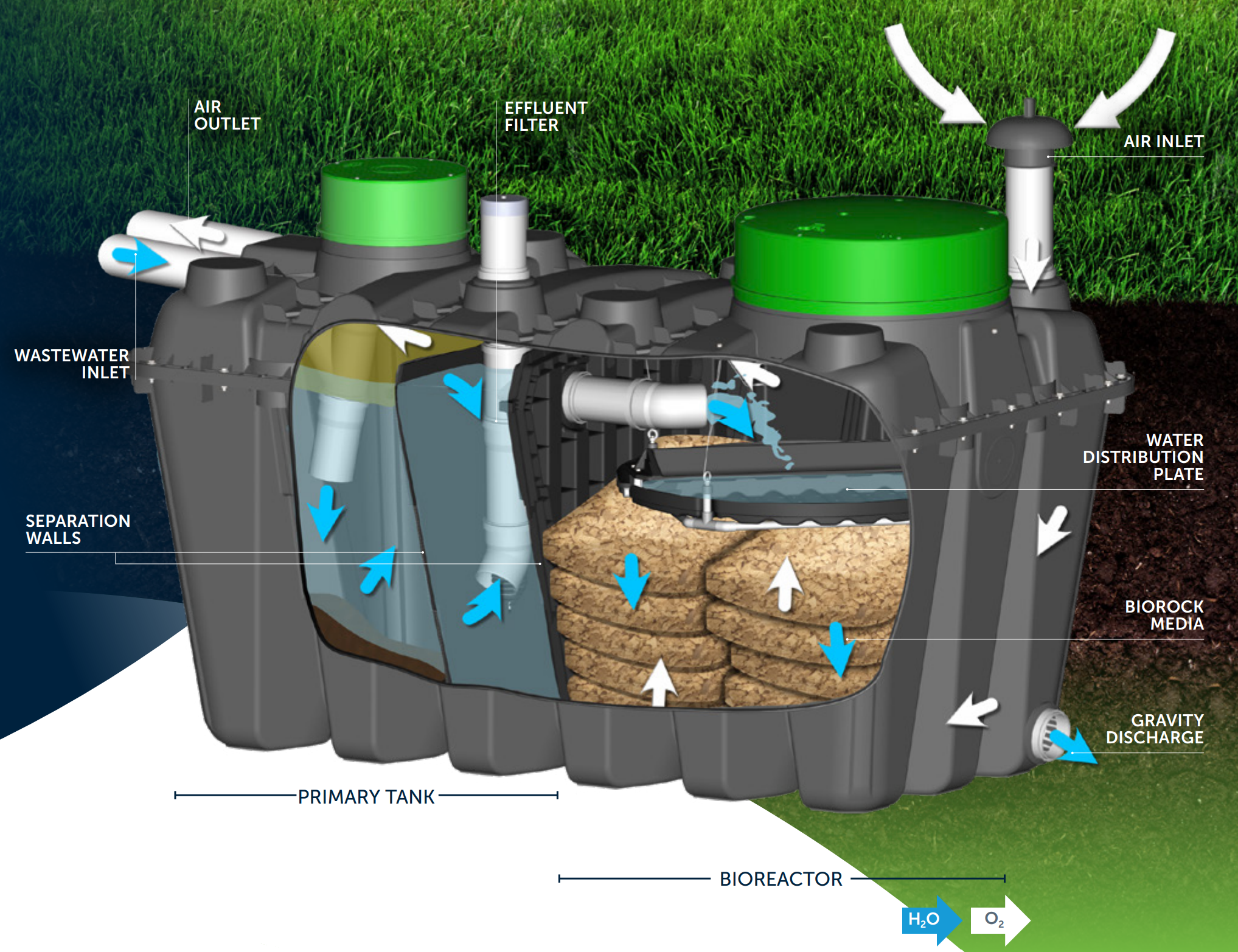
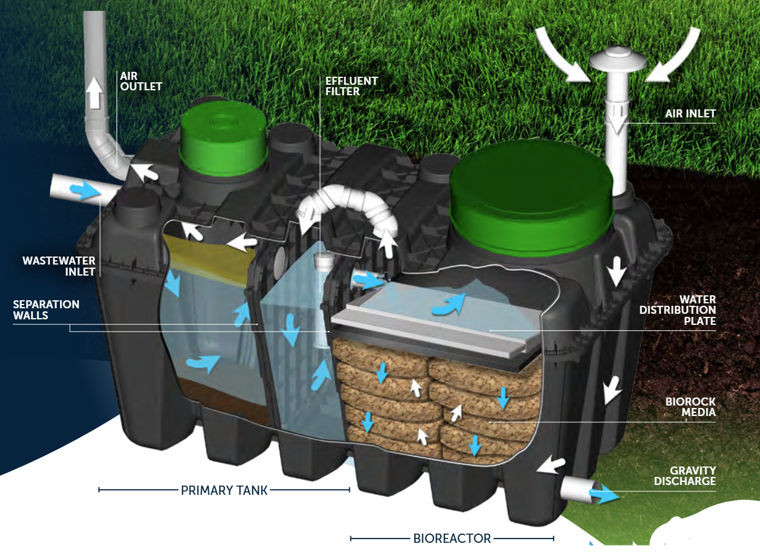
We treat black water (toilet waste) using the Biorock BEASY-2000, a compact, all-in-one biological treatment unit certified to the European standard EN 12566-3+A2. It was chosen after careful evaluation of available technologies, and for good reason:
Click to enlarge
No electricity, no moving parts. The BEASY-2000 operates entirely on passive aeration — wastewater flows through a mineral biofilm media bed where naturally occurring bacteria break down pollutants. There is nothing to break down, no pump to fail, no alarm to go off in the middle of the night.
Minimal maintenance. The system requires only an annual visual inspection and a desludging of the primary tank every three to five years under our low-occupancy cabin loading. No specialist equipment is needed — a licensed tanker visit every few years is all it takes.
Built for low and intermittent loads. Because we treat grey water separately, only toilet waste enters the BEASY-2000. This significantly reduces the biological load on the system — effectively placing it well within its rated capacity at all times. At this load level, the internal biofilm media may never need replacement over the lifetime of the installation.
Compact and self-contained. At just 225 × 121 × 121 cm, the entire two-stage system — primary settling tank and bioreactor — is housed in a single moulded unit. One tank, one connection, one annual check.
European certified. Discharge quality meets or exceeds the EN 12566-3+A2 standard, with BOD removal exceeding 94% and COD removal exceeding 85% in certified testing. This is a system with a documented, verified performance record across thousands of installations in Europe, including Scandinavia.
Grey water treatment — Biolan filter with surge buffer
Grey water from sinks, showers, and baths is treated by a dedicated passive filter system: the Biolan Greywater Filter, a compact Finland-land made unit designed specifically for cabin and holiday home use in cold climates. Like the BEASY-2000, it requires no electricity and has no moving parts.
Water trickles downward through successive layers of peat, mineral fibre, and activated carbon, which together remove suspended solids, organic compounds, phosphorus, and odours before the treated water reaches a soakaway or drainage field. The filter media requires replacement every few years — a straightforward task taking less than an hour.
Managing peak flows — The surge buffer tank
The Biolan filter is optimised for steady, low flow rates — ideal for showers and basin use. A bathtub, however, can release 150 litres in under five minutes: a peak flow rate some 40 times higher than the filter can accept. Sending a bathtub drain directly to the Biolan would bypass treatment entirely and risk overloading the filter media.
Our solution is simple and entirely passive: a 200-litre surge buffer tank mounted on a rack above the Biolan inside the utility shed. All grey water — from kitchen sink, shower, basin, and bath — enters the surge tank first. A small-bore outlet at the base of the tank allows water to trickle down into the Biolan at a controlled, gentle rate regardless of how fast it arrived. No sensors, no valves, no electronics — just gravity doing its job.
Kitchen sink water carries fats, oils, and greases (FOG) from cooking and dishwashing. FOG is the primary cause of premature clogging in passive grey water filters. A simple passive grease trap — a small baffled chamber where warm water slows, FOG floats to the surface, and is retained — is installed immediately after the kitchen sink drain and before the surge tank. It requires cleaning every three to six months: a quick scoop-and-dispose task during routine cabin checks.
Shower and basin water bypasses the grease trap (it carries soap but negligible FOG) and flows directly into the surge tank. This separation of kitchen and bathing water streams keeps the grease trap small and the Biolan filter performing at its best.
Winter operation
Grey water arriving from a heated cabin is warm by nature — shower water at 35°C, dishwashing water at 40°C — and warms the Biolan filter media continuously during occupancy. The utility shed enclosure, already heated passively by the BEASY-2000’s thermostat heater, maintains a stable internal temperature well above freezing throughout winter. No supplemental heating is needed for the grey water system.
In the rare event of Biolan maintenance or media replacement, grey water can be temporarily rerouted to the BEASY-2000 via a simple manual valve — a contingency built into the pipework from the start. The BEASY handles the short-term combined load with ease.
The structure — A partial dig that makes sense and looks great
Rather than burying the tanks fully underground — expensive and challenging in Iceland’s rocky volcanic substrate at several cabin locations — we partially sink a purpose-built utility enclosure into the ground, typically one metre below grade. This approach is deliberate and smart on multiple levels:
Excavation cost is kept to a minimum. Full burial of tanks in Icelandic lava rock can cost several times the price of the equipment itself. Our partial-dig approach requires a modest, manageable excavation — reducing groundwork costs significantly while achieving the same thermal and structural benefits.
The ground does the heavy lifting thermally. At one metre depth, the surrounding earth and rock maintain a stable temperature year-round — buffering the system against Iceland’s winter extremes. The three buried or bermed walls of the enclosure are insulated with moisture-resistant XPS foam board, ensuring that the internal environment stays comfortably above the minimum operating temperature even in the coldest months.
A small 200W thermostatically controlled heater — no larger than an aquarium heater — is placed in the BEASY-2000 primary tank as a backup for the coldest periods. It consumes less energy annually than a single light bulb left on for a week, and ensures the bacterial treatment community remains active and effective regardless of external conditions.
Pipe runs between the cabin and the enclosure are kept short and insulated, eliminating any risk of freezing in the connection lines.
The architecture — An Icelandic turf structure
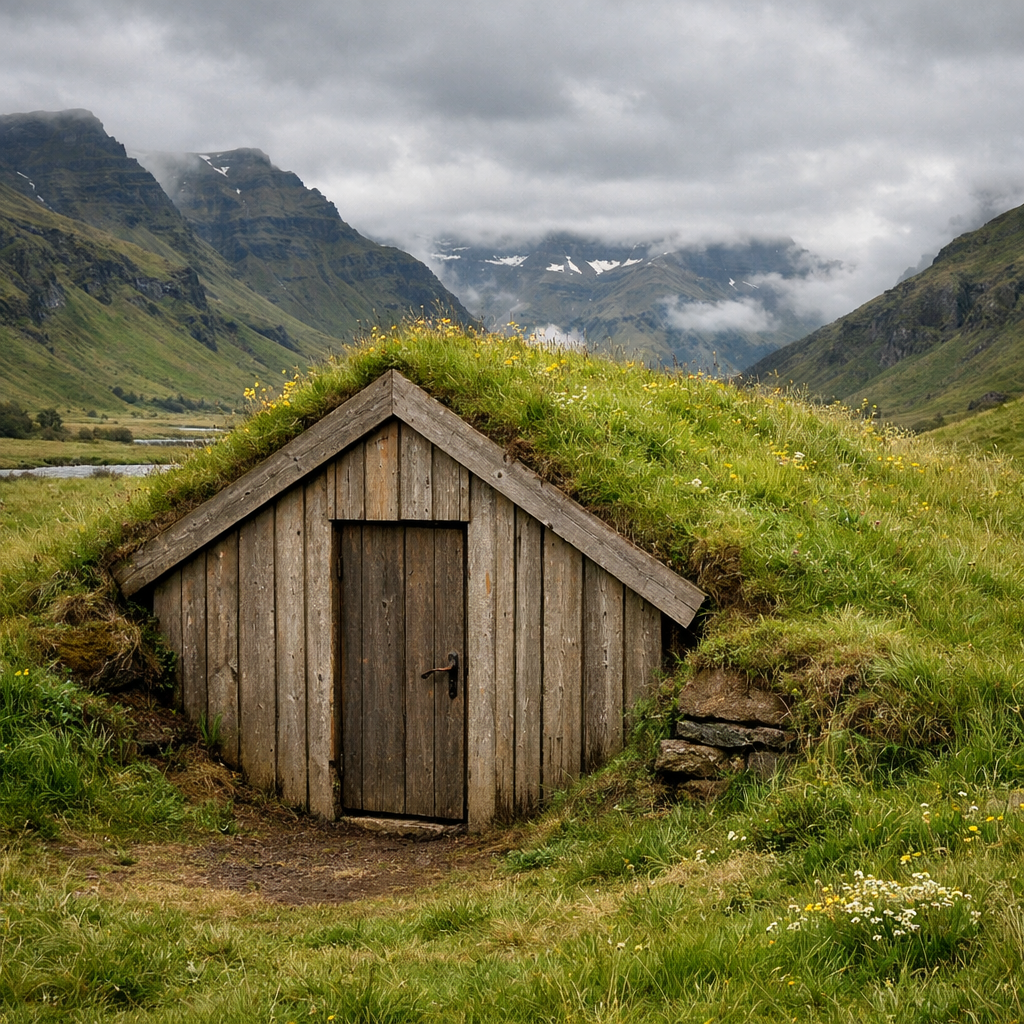
The enclosure itself is built in the tradition of Iceland’s historic torfbær — the turf outbuildings that have sheltered tools, food stores, and animals in this landscape for over a thousand years. A simple timber-framed structure with a 30-degree pitched roof, it presents only a weathered wooden gable and a low door to the outside world. Everything else disappears under living turf.
Click to enlarge
The roof follows traditional construction: a structural timber deck, a modern EPDM rubber waterproofing membrane in place of the original birch bark, a drainage layer, and two layers of Icelandic turf slab — the lower layer grass-side down, the upper grass-side up — just as it has always been done. Within a single growing season, the roof is indistinguishable from the surrounding meadow.
Three sides of the structure are bermed with the excavated material and seeded with local grasses. The fourth side — the entrance face — can be oriented toward the cabin for convenient access, or away from the main view to preserve sightlines.
The result is a structure that is essentially invisible in the landscape — a small green rise in the ground, entirely at home in Iceland’s valleys and hillsides.
More than a utility box — A true services hub
The enclosure is dimensioned generously enough — approximately 250 × 320 cm internally — to serve as a complete services hub for each cabin cluster. Inside, every system is accessible from a single point:
| Service | Notes |
|---|---|
| Biorock BEASY-2000 | Black water biological treatment — primary tank + bioreactor in one unit |
| Biolan grey water filter | Passive filter for sink, shower, and bath water |
| 200L surge buffer tank | Mounted on rack above Biolan — absorbs peak bath flows passively |
| Kitchen sink grease trap | Protects filter media from fats, oils, and grease |
| Potable water meter & shutoff | Accessible without entering the cabin |
| Heating circuit distribution & heat exchanger | Hot water from a central source distributed to cabins from this point |
| Electrical connection point & main breaker | Per-cabin metering and isolation in one accessible location |
| Storage | Chemicals, maintenance tools, spare parts — on a simple shelf above the tanks |
This means that every utility serving the cabin can be accessed, inspected, isolated, and serviced from a single point, without entering the cabin or disturbing guests. For a hospitality operation, this is a significant operational advantage — maintenance can be performed discreetly, quickly, and at any time.
The cabin underfloor installation for the cabin turning system will have a separate access point, also avoiding the need for cabin entry during routine checks.
In summary
Our wastewater and utility approach at Hugarro combines European-certified biological treatment technology with centuries-old Icelandic building tradition. Black water and grey water are treated separately — each by a system sized and optimised for its specific task — and both housed within a single compact enclosure that is virtually invisible in the landscape.
The result is a system that is invisible to guests, kind to the environment, robust in all seasons, and straightforward to maintain — a small buried structure that quietly does everything, and shows almost nothing.
All Hugarró sewage systems meet or exceed applicable Icelandic and European standards (ÍST EN 12566 / EN 16941-2).
Hotel & geothermal pool facilities
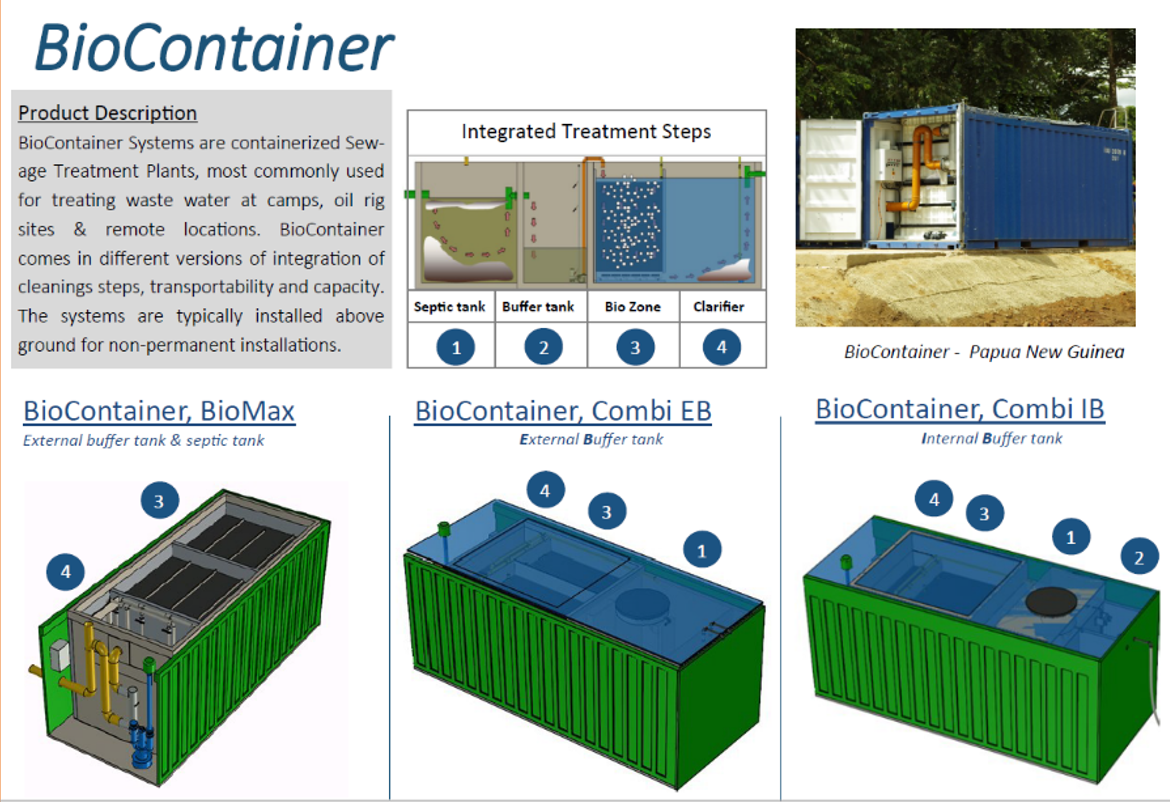
Our hotel and pool complex is served by a compact, containerised biological treatment plant — fully out of sight and designed for the higher load of a commercial accommodation facility.
Free-standing cabins
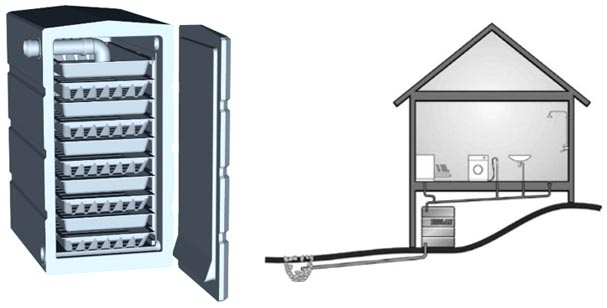
Each cabin uses a certified two-stage septic system. We separate grey water (showers, kitchen sinks — typically up to 70% of total wastewater volume) from black water (toilets), feeding only the smaller black water stream into the septic tank. This significantly reduces tank size and the footprint of the required soakaway field — a real advantage on a site where we want to keep the land as undisturbed as possible.
Monitoring & maintenance
All systems are remotely monitored — tank levels and temperatures are tracked continuously so that any issue can be caught and resolved before it becomes a problem. Routine maintenance needs are minimal by design.
Year-round reliability — Thanks to geothermal
Iceland’s winters can challenge conventional septic systems. Because Hugarró has its own geothermal source, every cabin can be connected to gentle tank heating, ensuring reliable, trouble-free operation throughout the year — at no additional energy cost.
Water reuse
Treated effluent from the grey water systems can be used for on-site irrigation where appropriate, and otherwise infiltrates naturally back into the ground. A clean cycle, fitting for a site where clean water is both abundant and worth protecting.
Geothermal
and how Hugarró goes far beyond them
What makes geothermal pools in Iceland unique — and what does it take to keep them safe, sustainable, and natural at the same time?
translation below
What makes Icelandic geothermal pools so special?
Iceland’s geothermal pools are a product of the country’s unique geology. Water heated deep underground is mixed with cold water to set temperatures between 36–42°C — perfect for soaking, but also a warm, nutrient-rich environment in which bacteria can multiply quickly. Unlike outdoor seawater beaches or cold freshwater lakes, a warm pool with dozens of bathers needs active water quality management.
In most countries around the world, this is solved with chlorine and other chemical disinfectants. In Iceland, chemicals are explicitly prohibited in natural bathing facilities under Regulation No. 460/2015 (Reglugerð um baðstaði í náttúrunni). That is what makes Icelandic geothermal bathing culture genuinely different — and what makes the engineering challenge so interesting.
What does Icelandic law require instead?
The traditional solution used across Iceland is straightforward and effective, but also very resource-intensive: replace 30–40% of the pool’s total water volume every single day. Fresh cold water and geothermal hot water are continuously mixed in and the “old” water is flushed out — millions of litres of heated water discharged daily into drainage ditches.
The relevant law, Regulation No. 460/2015, classifies natural bathing facilities and sets bacterial count limits (e.g. E. coli < 500/100 ml; Enterococci < 200/100 ml for Class 1 facilities). The regulation requires:
- A minimum of 10 water samples per year for Class 1 facilities (like ours)
- An internal control system with risk assessments, incident logs, and staff training
- A documented emergency and contingency plan
- Strict bather number controls
- Mandatory signage, changing rooms, showers, and first aid on site
The regulation is outcome-based, not technology-prescriptive — meaning it sets the results you must achieve, not the method you must use. This is the regulatory opening that Hugarró’s engineering approach is built on.
What category does Hugarró fall under?
Hugarró is classified as a Recreation Pool (Afþreyingarlaug) — Class 1 — under Regulation 460/2015. This is the highest level of oversight, applying to facilities that operate regularly and year-round. It requires a full operating licence (starfsleyfi) from the local Health Committee, comprehensive internal controls, and continuous compliance with bacterial quality standards.
We welcome this level of scrutiny. Our systems are designed to far exceed Class 1 requirements, not merely meet them.
Why are chemicals not used — and why is that actually fine?
Chemicals such as chlorine kill bacteria effectively, but they have a serious downside: they react with organic matter introduced by bathers (sweat, skin cells, urine) to produce disinfection by-products (DBPs) — compounds that are themselves potentially harmful and are responsible for the characteristic “pool smell” most people associate with indoor public pools. In Iceland, the law simply prohibits them in natural bathing facilities.
The good news is that, as research has demonstrated, chemicals are not actually necessary if you control the source of contamination and treat the water effectively through physical methods.
What does the science say? The Keuten/Delft Study
Researcher M.C. Keuten at Delft University of Technology published a landmark study on bacterial pollution in swimming pools and how to reduce it — *Alternative Pool Water Treatment and the Influence of Swimmers on Water Quality*.
The study used a specially instrumented shower cabin to precisely measure the pollutants released by bathers before and during swimming. The key findings are striking:
| Source of bacterial/pollutant load | Share of total |
|---|---|
| Submerged sweating during swimming | ~40% |
| Not showering before entering the pool | ~30% |
| Not using the toilet before entering the pool | ~30% |
This means that up to 60% of the bacterial input into a pool is directly controllable through bather behaviour — before any filtration or treatment technology is even needed. This is something Icelanders know well, which is why the country has a very strict pre-bath showering culture.
Keuten also demonstrated that UV disinfection combined with ultrafiltration — with no chemicals — can achieve microbial water quality comparable to chlorinated pools. Biological filtration further improved the removal of dissolved substances such as urea, reducing the formation of unwanted by-products.
What does Hugarró do to reduce bacterial input at the source?
Based directly on Keuten’s research, Hugarró has designed a two-step pre-entry protocol backed by technology, not just signage:
- Mandatory pre-swim shower — Our facilities use sensor-based nudging technology that confirms a minimum 1.5 minutes of showering before entry is unlocked. This alone eliminates approximately 30% of the bacterial load that would otherwise enter the pool. A visible timer shows the bather how much time is left.
- Toilet-first culture — Clear prompts, facility design, and staff communication encourage guests to use the toilet before bathing — targeting the remaining 30% of avoidable bacterial input.
Across our 7 pools, strict bather number limits are enforced in real time, both to comply with the regulatory requirement for access control and to ensure that the filtration system is never overwhelmed.
How does Hugarró manage water quality without chemicals and without massive water waste?
Instead of continuously flushing out large volumes of water, Hugarró’s pools are equipped with continuous ultrafiltration — a physical membrane-based process that removes bacteria, particles, and micro-organisms from pool water in a closed loop. This is combined with continuous water quality monitoring using systems such as those developed by bNovate, which allows near-real-time measurement of bacterial counts.
The result:
-
- Water savings of over 90% compared to the traditional daily-replacement model used elsewhere in Iceland
- Energy savings of over 30% in heating, as far less cold replacement water needs to be heated
- Pool water that can be cycled to within safe bacteriological limits within one hour if needed — compared to the days it would take under a simple dilution/replacement model
Why ultrafiltration alone is not enough — the role of the active carbon biofilter
Ultrafiltration is highly effective at removing bacteria, viruses, and suspended particles from pool water. However, it has one fundamental limitation: its membranes work by physical size exclusion, and the pores are far too large to capture dissolved molecules. Urea — the primary dissolved contaminant in sweat and urine — is a small molecule (~0.4 nm) that passes straight through a UF membrane unimpeded.
This matters particularly in a geothermal pool at 38°C. At that temperature, the water is warmer than the human body’s cooling threshold, meaning that bathers sweat continuously and passively, even while sitting still. Research has measured sweat secretion of over 500 ml per person per hour during passive immersion at this temperature. Urea accumulates in the water with every bather, every session, every day — and UF does nothing to stop it.
To address this, Hugarró’s filtration system includes a biological active carbon filter. Granular activated carbon (GAC) offers an extraordinarily large internal surface area — hundreds of square metres per gram — on which both physical adsorption and biological degradation take place simultaneously:
- Adsorption: urea and other dissolved organic compounds bind chemically to the carbon surface and are removed from the water
- Biodegradation: beneficial micro-organisms colonise the carbon medium and break down the adsorbed organic matter into harmless compounds
This dual mechanism makes active carbon significantly more effective than alternative biological media such as MBBR carriers (moving bed biofilm reactors), which rely on biological action alone and offer no adsorption capacity. In a chemical-free system with clean fill water, active carbon can dedicate its full adsorption capacity exclusively to the dissolved substances introduced by bathers — making it the ideal complement to ultrafiltration.
Together, UF and the active carbon biofilter cover what neither can achieve alone: UF handles pathogens and particles; the biofilter handles dissolved organics. The result is pool water that is clean in every meaningful sense of the word.
Does Hugarró have any water replacement at all?
Yes — a small amount. Natural evaporation from the pool surface means that water is slowly lost and must be topped up. This amounts to less than 10% of pool volume per day — a fraction of the 30–40% daily replacement that is standard practice at comparable Icelandic geothermal pools. This replacement water is part of the natural water cycle, not a deliberate “flush-and-refill” approach.and-refill” approach.
How does Hugarró monitor water quality — and how does this compare to the law?
The law requires a minimum of 10 water quality checks per year for Class 1 facilities — roughly once per month. At Hugarró, we check every pool every 2 hours, using continuous real-time monitoring technology. This means:
| Parameter | Legal minimum (Class 1) | Hugarró standard |
|---|---|---|
| Water quality sampling frequency | 10×/year (~monthly) | Every 2 hours |
| Response time to exceedance | Days (lab turnaround) | Within 1 hour (automated filtration response) |
| Bather number enforcement | Required, method unspecified | Real-time sensor-based control per pool |
Any exceedance of our internal quality thresholds triggers an automated filtration response. Our systems are designed to restore water to within safe parameters within one hour — even under peak load. In fact, the moment bacterial quality moves from the ‘green’ to the ‘yellow’ zone, we increase filtration on the pool in question to prevent it from ever reaching the ‘red’ zone.
Moreover, our system can be remotely monitored via online dashboards by the health authorities — providing real-time oversight rather than after-the-fact sampling during a site visit.
Other measures to assure water quality
An important part of our quality control system is pool design. By creating overflow around all pool edges, the formation of a bacterial biofilm on the water surface is minimised. Pool surfaces are smoother than standard concrete pool surfaces, which greatly reduces the build-up of deposits that are a breeding ground for bacterial growth, and allows easy cleaning.
Water flow through the pools — comprising evaporation replacement water as well as heated water inflow — is carefully engineered to avoid stagnant areas, which can lead to bacterial development. This is the principle behind the ‘islands’ in our pools: filtered water enters via the bottom of the pool and rises upward, flowing over the edges and carrying any contamination with it. This creates a continuously circulating cycle, carefully monitored by automation.
Are there any rules in Iceland that prohibit ultrafiltration?
No. Regulation 460/2015 contains no prohibition on ultrafiltration. The regulation is outcome-based — it sets bacterial limits and requires that a documented internal control system is in place. It does not prescribe which technology must be used to achieve those limits.
The regulation does describe the standard model for recreation pools as relying on “frequent water renewal and bather number control” — which is how the traditional approach is framed. However, since the law is outcome-focused, an alternative method that demonstrably achieves the same (or better) bacteriological outcomes is legally defensible.
Hugarró engages proactively with the local Health Committee to ensure our approach is fully documented, understood, and approved as part of our operating licence conditions. This regulatory dialogue will be an ongoing part of our operations and we hope to set an example for bacterial water control in Iceland.
What does the local Health Committee inspect?
The local Health Committee (heilbrigðisnefnd) holds broad powers under Regulation 460/2015 and the underlying Public Health Act No. 7/1998:
- Unrestricted access for inspections and water sampling at any time
- Power to issue public warnings and erect warning signs if bacterial limits are repeatedly exceeded
- Power to cap the number of bathers in a recreation pool
- Power to order additional sampling beyond the minimum (at the operator’s cost)
- Power to authorise or order disinfection — only by radiation or other non-chemical means — if quality standards are repeatedly not met
All of Hugarró’s water quality results — as required — are forwarded to the Environment Agency of Iceland (Umhverfisstofnun), where they are published publicly. We are confident in our results and welcome public transparency.
The bottom line
Hugarró operates at the intersection of Icelandic bathing culture, environmental responsibility, and evidence-based water science. We comply fully with Regulation No. 460/2015 as a Class 1 Recreation Pool — and go significantly further in every measurable dimension of water safety, resource efficiency, and monitoring rigour.
Our approach is not a workaround. It is what responsible geothermal bathing looks like when engineering and science are applied seriously to an age-old challenge
Click to enlarge
Íslenskar reglugerðir um böðun í náttúrunni
Íslenskar reglugerðir um böðun í náttúrunni
og hvernig Hugarró fer langt fram úr þeim
Hvað gerir íslenskar jarðhitalaugar einstakar — og hvað þarf til að halda þeim öruggum, sjálfbærum og náttúrulegum á sama tíma?
Hvað gerir íslenskar jarðhitalaugar svona sérstakar?
Íslenskar jarðhitalaugar eru afurð einstakrar jarðfræði landsins. Vatni sem hitnar djúpt í jörðu er blandað við kalt vatn til að ná 36–42°C hita — fullkomið til að láta fara vel um sig, en jafnframt hlýtt og næringarríkt umhverfi þar sem bakteríur geta fjölgað sér hratt. Ólíkt sjávarströndum eða köldum ferskvatnsstöðum þarf hlý laug með tugum gesta virka stjórnun á vatnsgæðum.
Í flestum löndum heims er þetta leyst með klór og öðrum sótthreinsiefnum. Á Íslandi eru kemísk efni beinlínis bönnuð á náttúrulegum baðstöðum samkvæmt Reglugerð nr. 460/2015 (Reglugerð um baðstaði í náttúrunni). Það er það sem gerir íslenska baðmenningu sannarlega frábrugðna — og gerir verkfræðilegu áskorunina svo áhugaverða.
Hvað krefjast íslensk lög í staðinn?
Hefðbundna lausnin sem notuð er um allt Ísland er einföld og áhrifarík, en jafnframt mjög auðlindafrek: skipta út 30–40% af heildarvatnsmagni laugarinnar á hverjum einasta degi. Fersku köldu vatni og heitu jarðhitavatni er stöðugt blandað saman og „gamla“ vatninu skolað út — milljónir lítra af hituðu vatni renna daglega í frárennslisskurði.
Viðeigandi lög, Reglugerð nr. 460/2015, flokka náttúruleg baðsvæði og setja mörk fyrir gerlafjölda (t.d. E. coli < 500/100 ml; Enterokokkar < 200/100 ml fyrir flokk 1). Reglugerðin krefst:
- Að lágmarki 10 vatnssýni á ári fyrir mannvirki í flokki 1 (eins og okkar)
- Innra eftirlitskerfi með áhættumati, atvikaskráningu og þjálfun starfsfólks
- Skráð neyðar- og viðbragðsáætlun
- Strangt eftirlit með fjölda baðgesta
- Skyldubundnar merkingar, búningsklefar, sturtur og skyndihjálp á staðnum
Reglugerðin er árangursmiðuð, ekki tækniforskrift — sem þýðir að hún setur fram þá niðurstöðu sem þarf að ná, en ekki hvaða aðferð þarf að nota. Þetta er reglugerðaropnunin sem verkfræðileg nálgun Hugarró byggir á.
Undir hvaða flokk fellur Hugarró?
Hugarró er flokkað sem Afþreyingarlaug (Afþreyingarlaug) — Flokkur 1 — samkvæmt reglugerð 460/2015. Þetta er hæsta stig eftirlits og á við um mannvirki sem starfrækt eru reglulega og allt árið um kring. Það krefst fulls starfsleyfis frá heilbrigðisnefnd sveitarfélagsins, yfirgripsmikils innra eftirlits og stöðugrar fylgni við gæðastaðla fyrir gerla.starfsleyfistarfsleyfi
Við fögnum þessu eftirliti. Kerfin okkar eru hönnuð til að fara langt fram úr kröfur í flokki 1 ríflega, en ekki bara uppfylla þær.
Af hverju eru engin kemísk efni notuð — og af hverju er það í raun í lagi?
Efni eins og klór drepa bakteríur á áhrifaríkan hátt, en þeim fylgir alvarlegur galli: þau hvarfast við lífræn efni sem berast með sundgestum (svita, húðfrumum, þvagi) og mynda aukaafurðir sótthreinsunar (DBP) — efnasambönd sem geta sjálf verið skaðleg og bera ábyrgð á hinni dæmigerðu „sundlaugalykt“ sem flestir tengja við almenningslaugar innanhúss. Á Íslandi banna lög þessi efni einfaldlega í náttúrulegum baðstöðum.
Góðu fréttirnar eru þær að rannsóknir hafa sýnt að kemísk efni eru í raun óþörf ef stjórnað er upptökum mengunar og vatnið meðhöndlað á áhrifaríkan hátt með eðlisfræðilegum aðferðum.
Hvað segja vísindin? Keuten/Delft rannsóknin
Rannsakandinn M.C. Keuten við Tækniháskólann í Delft birti tímamótarannsókn á bakteríumengun í sundlaugum og hvernig megi draga úr henni — *Alternative Pool Water Treatment and the Influence of Swimmers on Water Quality*.
Í rannsókninni var notaður sérútbúinn sturtuklefi til að mæla nákvæmlega þau mengunarefni sem losna frá sundgestum fyrir og á meðan þeir synda. Helstu niðurstöður eru sláandi:
| Upptök bakteríu- og mengunarálags | Hlutfall af heild |
|---|---|
| Svitamyndun í kafi á meðan sundi | ~40% |
| Að fara ekki í sturtu áður en farið er í laugina | ~30% |
| Að nota ekki salernið áður en farið er í laugina | ~30% |
Þetta þýðir að hægt er að stjórna allt að 60% af bakteríumagni sem berst í laug beint með hegðun gesta — áður en nokkur síunar- eða hreinsitækni er yfirhöfuð nauðsynleg. Þetta er eitthvað sem Íslendingar þekkja vel, og þess vegna ríkir hér á landi mjög ströng menning varðandi sturtuferðir fyrir sund.
Keuten sýndi einnig fram á að UV-sótthreinsun ásamt ofursíun (ultrafiltration) — án nokkurra íðefna — getur náð fram örverufræðilegum vatnsgæðum sem eru sambærileg við klóraðar laugar. Líffræðileg síun bætti enn frekar fjarlægingu uppleystra efna eins og þvagefnis, sem dregur úr myndun óæskilegra aukaafurða.
Hvað gerir Hugarró til að draga úr bakteríumagni við upptökin?
Byggt beint á rannsóknum Keuten, hefur Hugarró hannað tveggja þrepa aðgangsferli sem studd er af tækni, ekki bara skiltum:
- Skyldubundin sturta fyrir sund — Aðstaða okkar notar skynjaratækni sem hvetur gesti og staðfestir að lágmarki 1,5 mínútna sturtuferð áður en opnað er fyrir aðgang. Þetta eitt og sér eyðir um það bil 30% af því bakteríumagni sem annars myndi berast í laugina. Sýnilegur tímamælir sýnir gestinum hversu mikill tími er eftir.
- Salernismenning í fyrirrúmi — Skýrar ábendingar, hönnun aðstöðunnar og samskipti starfsfólks hvetja gesti til að nota salernið fyrir sundferðina — sem beinist að þeim 30% af forðanlegu bakteríumagni sem eftir standa.
Í okkar 7 laugum, er ströngum takmörkunum á fjölda gesta fylgt eftir í rauntíma, bæði til að uppfylla reglugerðarkröfur um aðgangsstýringu og til að tryggja að síunarkerfið verði aldrei ofhlaðið.
Hvernig stýrir Hugarró vatnsgæðum án íðefna og án gífurlegrar vatnssóunar?
Í stað þess að skola stöðugt út miklu magni af vatni, eru laugar Hugarró búnar samfelldri ofursíun — eðlisfræðilegu ferli byggðu á himnum sem fjarlægir bakteríur, agnir og örverur úr laugavatninu í lokaðri hringrás. Þessu er fylgt eftir með stöðugri vöktun á vatnsgæðum með kerfum eins og þeim sem þróuð eru af bNovate, sem gerir kleift að mæla bakteríufjölda nánast í rauntíma.
Niðurstaðan:
-
- Yfir 90% vatnssparnaður miðað við hefðbundna líkanið þar sem vatni er skipt út daglega eins og annars staðar á Íslandi
- Yfir 30% orkusparnaður í upphitun, þar sem hita þarf mun minna af köldu ferskvatni
- Laugavatn sem hægt er að hreinsa upp að öruggum gerlamörkum innan klukkustundar ef þörf krefur — samanborið við þá marga daga sem það tæki með einfaldri útskiptingu vatns
Af hverju ofursíun ein og sér dugar ekki — hlutverk lífvirkrar kolsíu
Ofursíun er mjög áhrifarík við að fjarlægja bakteríur, vírusa og svifagnir úr sundlaugarvatni. Hún hefur þó eina grundvallartakmörkun: himnurnar virka með eðlisfræðilegri stærðarsíun og svitaholurnar eru allt of stórar til að fanga uppleystar sameindir.Þvagefni — helsta uppleysta mengunarefnið í svita og þvagi — er lítil sameind (~0,4 nm) sem fer óhindrað beint í gegnum ofursíunarhimnu.
Þetta skiptir sérstaklega miklu máli í jarðhitalaug sem er 38°C heit. Við það hitastig er vatnið heitara en kæliþröskuldur mannslíkamans, sem þýðir að baðgestir svitna stöðugt og ómeðvitað, jafnvel þótt þeir sitji kyrrir. Rannsóknir hafa mælt svitamyndun yfir 500 ml á mann á klukkustund við óvirka dvöl í vatni við þetta hitastig. Þvagefni safnast upp í vatninu með hverjum gesti, hverri baðferð, á hverjum degi — og ofursíun gerir ekkert til að stöðva það.
Til að bregðast við þessu inniheldur síunarkerfi Hugarró lífvirka kolsíu. Virkt kornakol (GAC) býður upp á óvenju stórt innra yfirborð — mörg hundruð fermetra á hvert gramm — þar sem bæði eðlisfræðileg ásog og líffræðileg niðurbrot eiga sér stað samtímis:
- Ásog: þvagefni og önnur uppleyst lífræn efnasambönd bindast efnafræðilega við yfirborð kolsins og eru fjarlægð úr vatninu
- Líffræðilegt niðurbrot: gagnlegar örverur setjast að í kolefninu og brjóta niður ásoguð lífræn efni í skaðlaus efnasambönd
Þetta tvíþætta ferli gerir virkt kol mun skilvirkara en önnur líffræðileg síuefni eins og MBBR-berar (skolpsíur með hreyfanlegu undirlagi), sem treysta eingöngu á líffræðilega virkni og hafa enga ásogsgetu. Í efnalausu kerfi með hreinu fyllivatni getur virka kolið nýtt alla ásogsgetu sína eingöngu fyrir þau uppleystu efni sem berast með baðgestum — sem gerir það að fullkominni viðbót við ofursíun.
Saman ná UF og virka kolefnis-lífsían því sem hvorugt getur áorkað eitt og sér: UF sér um sýkla og agnir; lífsían sér um uppleyst lífræn efni. Niðurstaðan er sundlaugarvatn sem er hreint í fyllsta skilningi þess orðs.
Er einhver vatnsskipti yfirhöfuð hjá Hugarró?
Já — lítið magn. Náttúruleg uppgufun af yfirborði laugarinnar þýðir að vatn tapast hægt og rólega og þarf að fylla á hana. Þetta nemur minna en 10% af rúmmáli laugarinnar á dag — broti af þeim 30–40% daglegu vatnsskiptum sem eru venjubundin í sambærilegum íslenskum jarðhitalaugum. Þetta áfyllingarvatn er hluti af náttúrulegri hringrás vatnsins, ekki meðvituð „tæma-og-fylla“ nálgun.
Hvernig vaktar Hugarró vatnsgæði — og hvernig er það í samanburði við lög?
Lögin krefjast að lágmarki 10 mælingar á vatnsgæðum á ári fyrir flokk 1 — u.þ.b. einu sinni í mánuði. Hjá Hugarró athugum við hverja laug á 2 klukkustunda fresti, með því að nota tækni sem vaktar vatnið stöðugt í rauntíma. Þetta þýðir:
| Mælistærð | Lagalegt lágmark (Flokkur 1) | Hugarró staðall |
|---|---|---|
| Tíðni sýnatöku á vatnsgæðum | 10× á ári (~mánaðarlega) | Á 2 klukkustunda fresti |
| Viðbragðstími við frávikum | Dagar (bið eftir rannsóknarstofu) | Innan 1 klukkustundar (sjálfvirkt viðbragð síunarkerfis) |
| Eftirlit með fjölda gesta | Skylt, aðferð ekki tilgreind | Rauntíma eftirlit með skynjurum í hverri laug |
Öll frávik frá okkar innri gæðaviðmiðum ræsa sjálfvirkt viðbragð í síunarkerfinu. Kerfin okkar eru hönnuð til að koma vatninu aftur innan öruggra marka innan klukkustundar — jafnvel við hámarksálag. Í raun, um leið og bakteríugæði færast úr „græna“ svæðinu yfir í það „gula“, aukum við síun í viðkomandi laug til að koma í veg fyrir að hún nái nokkurn tímann í „rauða“ svæðið.
Auk þess geta heilbrigðisyfirvöld fylgst með kerfinu okkar í gegnum mælaborð á netinu — sem veitir rauntímaeftirlit í stað sýnatöku eftir á við vettvangsheimsókn.
Aðrar ráðstafanir til að tryggja vatnsgæði
Mikilvægur hluti af gæðaeftirlitskerfi okkar er hönnun lauganna. Með því að hafa yfirfall meðfram öllum laugarköntum er myndun örveruskánar á yfirborði vatnsins lágmörkuð. Yfirborð lauganna er sléttara en á hefðbundnum steyptum laugum, sem dregur verulega úr útfellingum sem eru gróðrarstía fyrir bakteríuvöxt og auðveldar þrif.
Vatnsrennsli í gegnum laugarnar — sem samanstendur af vatni til að mæta uppgufun ásamt innrennsli á heitu vatni — er vandlega hannað til að forðast kyrrstöðusvæði þar sem bakteríur geta þrifist. Þetta er meginreglan á bak við „eyjarnar“ í laugunum okkar: síað vatn kemur inn um botn laugarinnar og stígur upp, flæðir yfir kanta og ber með sér hvers kyns óhreinindi. Þetta skapar stöðuga hringrás sem er vandlega vöktuð með sjálfvirkni.
Eru einhverjar reglur á Íslandi sem banna ofursíun?
Nei. Reglugerð 460/2015 inniheldur ekkert bann við ofursíun. Reglugerðin er árangursmiðuð — hún setur mörk fyrir gerlafjölda og krefst þess að skjalfest innra eftirlitskerfi sé til staðar. Hún kveður ekki á um hvaða tækni skuli nota til að ná þeim mörkum.
Reglugerðin lýsir staðallíkani fyrir baðstaði sem byggir á „tíðri endurnýjun vatns og takmörkun á fjölda baðgesta“ — sem er hefðbundna nálgunin. Hins vegar, þar sem lögin einblína á niðurstöður, er önnur aðferð sem sýnanlega nær sömu (eða betri) niðurstöðum varðandi gerlafjölda lagalega verjanleg.
Hugarró á í virku samstarfi við Heilbrigðisnefnd til að tryggja að nálgun okkar sé fyllilega skjalfest, skilin og samþykkt sem hluti af starfsleyfisskilyrðum okkar. Þetta samtal við eftirlitsaðila verður áframhaldandi hluti af starfsemi okkar og við vonumst til að vera fyrirmynd í bakteríustjórnun vatns á Íslandi.
Hvað skoðar heilbrigðisnefndin?
Heilbrigðisnefnd (heilbrigðisnefnd) hefur víðtækar heimildir samkvæmt reglugerð nr. 460/2015 og undirliggjandi lögum um hollustuhætti og mengunarvarnir nr. 7/1998:
- Ótakmarkaður aðgangur vegna eftirlits og sýnatöku hvenær sem er
- Heimild til að gefa út opinberar viðvaranir og setja upp viðvörunarskilti ef gerlamörk eru ítrekað yfir mörkum
- Heimild til að takmarka fjölda baðgesta á baðstað
- Heimild til að fyrirskipa aukna sýnatöku umfram lágmark (á kostnað rekstraraðila)
- Heimild til að heimila eða fyrirskipa sótthreinsun — eingöngu með geislun eða öðrum aðferðum án íblöndunarefna — ef gæðakröfur eru ítrekað ekki uppfylltar
Öllum niðurstöðum úr mælingum á vatnsgæðum Hugarró er — eins og krafist er — miðlað til Umhverfisstofnun (Umhverfisstofnun), þar sem þær eru birtar opinberlega. Við treystum okkar niðurstöðum og fögnum gagnsæi gagnvart almenningi.
Kjarni málsins
Hugarró starfar á mótum íslenskrar baðmenningar, umhverfisábyrgðar og gagnreyndra vatnsvísinda. Við fylgjum reglugerð nr. 460/2015 að fullu sem flokkur 1 fyrir afþreyingarlaugar — og göngum mun lengra á öllum mælanlegum sviðum vatnsöryggis, auðlindanýtingar og eftirlits.
Nálgun okkar er ekki undanleið. Svona lítur ábyrg jarðhitabaðmenning út þegar verkfræði og vísindum er beitt af alvöru við forna áskorun
Sewage
How Hugarro cabins handle wastewater the Icelandic way
At Hugarro, every detail of our cabin design is guided by three principles: respect for the landscape, reliability in all conditions, and simplicity of installation, operation and maintenance. Our approach to wastewater treatment is no exception — and it gives rise to one of our most quietly ingenious features: a small, fully functional utility structure that disappears almost entirely into the Icelandic hillside.
Why we separate black water and grey water
Not all wastewater is equal. In conventional systems, toilet waste and sink/shower water are combined and sent to a single treatment unit. We deliberately keep them separate — and for good reason.
Black water — from toilets only — is biologically concentrated but hydraulically modest. It contains the pathogens and nitrogen compounds that require robust biological treatment.
Grey water — from sinks, showers, and baths — accounts for 65–75% of total wastewater volume from a cabin, but carries a far lower biological load. It is primarily soap, body oils, food residue, and warm water.
Mixing the two forces a single system to handle both the peak hydraulic loads of bathing and the biological complexity of toilet waste simultaneously — a compromise in both directions. Separating them allows each system to be optimised for its actual task:
| Black water | Grey water | |
|---|---|---|
| Source | Toilets only | Sinks, showers, baths |
| Volume | Low (~50 L/person/day) | High (~100 L/person/day) |
| Biological load | High | Low–moderate |
| Treatment required | Full biological treatment | Filtration + passive biotreatment |
| Our system | Biorock BEASY-2000 | Biolan + surge buffer |
The practical result: ouir biological reactor will never be overwhelmed by peak shower or bath flows, operates well within its rated capacity at all times, and requires far less frequent maintenance than a combined system would. The grey water system, in turn, handles a cleaner, more predictable load and performs accordingly.
Black water treatment — The Biorock BEASY-2000
We treat black water (toilet waste) using the Biorock BEASY-2000, a compact, all-in-one biological treatment unit certified to the European standard EN 12566-3+A2. It was chosen after careful evaluation of available technologies, and for good reason:
Click to enlarge
No electricity, no moving parts. The BEASY-2000 operates entirely on passive aeration — wastewater flows through a mineral biofilm media bed where naturally occurring bacteria break down pollutants. There is nothing to break down, no pump to fail, no alarm to go off in the middle of the night.
Minimal maintenance. The system requires only an annual visual inspection and a desludging of the primary tank every three to five years under our low-occupancy cabin loading. No specialist equipment is needed — a licensed tanker visit every few years is all it takes.
Built for low and intermittent loads. Because we treat grey water separately, only toilet waste enters the BEASY-2000. This significantly reduces the biological load on the system — effectively placing it well within its rated capacity at all times. At this load level, the internal biofilm media may never need replacement over the lifetime of the installation.
Compact and self-contained. At just 225 × 121 × 121 cm, the entire two-stage system — primary settling tank and bioreactor — is housed in a single moulded unit. One tank, one connection, one annual check.
European certified. Discharge quality meets or exceeds the EN 12566-3+A2 standard, with BOD removal exceeding 94% and COD removal exceeding 85% in certified testing. This is a system with a documented, verified performance record across thousands of installations in Europe, including Scandinavia.
Grey water treatment — Biolan filter with surge buffer
Grey water from sinks, showers, and baths is treated by a dedicated passive filter system: the Biolan Greywater Filter, a compact Finland-land made unit designed specifically for cabin and holiday home use in cold climates. Like the BEASY-2000, it requires no electricity and has no moving parts.
Water trickles downward through successive layers of peat, mineral fibre, and activated carbon, which together remove suspended solids, organic compounds, phosphorus, and odours before the treated water reaches a soakaway or drainage field. The filter media requires replacement every few years — a straightforward task taking less than an hour.
Managing peak flows — The surge buffer tank
The Biolan filter is optimised for steady, low flow rates — ideal for showers and basin use. A bathtub, however, can release 150 litres in under five minutes: a peak flow rate some 40 times higher than the filter can accept. Sending a bathtub drain directly to the Biolan would bypass treatment entirely and risk overloading the filter media.
Our solution is simple and entirely passive: a 200-litre surge buffer tank mounted on a rack above the Biolan inside the utility shed. All grey water — from kitchen sink, shower, basin, and bath — enters the surge tank first. A small-bore outlet at the base of the tank allows water to trickle down into the Biolan at a controlled, gentle rate regardless of how fast it arrived. No sensors, no valves, no electronics — just gravity doing its job.
Kitchen sink water carries fats, oils, and greases (FOG) from cooking and dishwashing. FOG is the primary cause of premature clogging in passive grey water filters. A simple passive grease trap — a small baffled chamber where warm water slows, FOG floats to the surface, and is retained — is installed immediately after the kitchen sink drain and before the surge tank. It requires cleaning every three to six months: a quick scoop-and-dispose task during routine cabin checks.
Shower and basin water bypasses the grease trap (it carries soap but negligible FOG) and flows directly into the surge tank. This separation of kitchen and bathing water streams keeps the grease trap small and the Biolan filter performing at its best.
Winter operation
Grey water arriving from a heated cabin is warm by nature — shower water at 35°C, dishwashing water at 40°C — and warms the Biolan filter media continuously during occupancy. The utility shed enclosure, already heated passively by the BEASY-2000’s thermostat heater, maintains a stable internal temperature well above freezing throughout winter. No supplemental heating is needed for the grey water system.
In the rare event of Biolan maintenance or media replacement, grey water can be temporarily rerouted to the BEASY-2000 via a simple manual valve — a contingency built into the pipework from the start. The BEASY handles the short-term combined load with ease.
The structure — A partial dig that makes sense and looks great
Rather than burying the tanks fully underground — expensive and challenging in Iceland’s rocky volcanic substrate at several cabin locations — we partially sink a purpose-built utility enclosure into the ground, typically one metre below grade. This approach is deliberate and smart on multiple levels:
Excavation cost is kept to a minimum. Full burial of tanks in Icelandic lava rock can cost several times the price of the equipment itself. Our partial-dig approach requires a modest, manageable excavation — reducing groundwork costs significantly while achieving the same thermal and structural benefits.
The ground does the heavy lifting thermally. At one metre depth, the surrounding earth and rock maintain a stable temperature year-round — buffering the system against Iceland’s winter extremes. The three buried or bermed walls of the enclosure are insulated with moisture-resistant XPS foam board, ensuring that the internal environment stays comfortably above the minimum operating temperature even in the coldest months.
A small 200W thermostatically controlled heater — no larger than an aquarium heater — is placed in the BEASY-2000 primary tank as a backup for the coldest periods. It consumes less energy annually than a single light bulb left on for a week, and ensures the bacterial treatment community remains active and effective regardless of external conditions.
Pipe runs between the cabin and the enclosure are kept short and insulated, eliminating any risk of freezing in the connection lines.
The architecture — An Icelandic turf structure
The enclosure itself is built in the tradition of Iceland’s historic torfbær — the turf outbuildings that have sheltered tools, food stores, and animals in this landscape for over a thousand years. A simple timber-framed structure with a 30-degree pitched roof, it presents only a weathered wooden gable and a low door to the outside world. Everything else disappears under living turf.
Click to enlarge
The roof follows traditional construction: a structural timber deck, a modern EPDM rubber waterproofing membrane in place of the original birch bark, a drainage layer, and two layers of Icelandic turf slab — the lower layer grass-side down, the upper grass-side up — just as it has always been done. Within a single growing season, the roof is indistinguishable from the surrounding meadow.
Three sides of the structure are bermed with the excavated material and seeded with local grasses. The fourth side — the entrance face — can be oriented toward the cabin for convenient access, or away from the main view to preserve sightlines.
The result is a structure that is essentially invisible in the landscape — a small green rise in the ground, entirely at home in Iceland’s valleys and hillsides.
More than a utility box — A true services hub
The enclosure is dimensioned generously enough — approximately 250 × 320 cm internally — to serve as a complete services hub for each cabin cluster. Inside, every system is accessible from a single point:
| Service | Notes |
|---|---|
| Biorock BEASY-2000 | Black water biological treatment — primary tank + bioreactor in one unit |
| Biolan grey water filter | Passive filter for sink, shower, and bath water |
| 200L surge buffer tank | Mounted on rack above Biolan — absorbs peak bath flows passively |
| Kitchen sink grease trap | Protects filter media from fats, oils, and grease |
| Potable water meter & shutoff | Accessible without entering the cabin |
| Heating circuit distribution & heat exchanger | Hot water from a central source distributed to cabins from this point |
| Electrical connection point & main breaker | Per-cabin metering and isolation in one accessible location |
| Storage | Chemicals, maintenance tools, spare parts — on a simple shelf above the tanks |
This means that every utility serving the cabin can be accessed, inspected, isolated, and serviced from a single point, without entering the cabin or disturbing guests. For a hospitality operation, this is a significant operational advantage — maintenance can be performed discreetly, quickly, and at any time.
The cabin underfloor installation for the cabin turning system will have a separate access point, also avoiding the need for cabin entry during routine checks.
In summary
Our wastewater and utility approach at Hugarro combines European-certified biological treatment technology with centuries-old Icelandic building tradition. Black water and grey water are treated separately — each by a system sized and optimised for its specific task — and both housed within a single compact enclosure that is virtually invisible in the landscape.
The result is a system that is invisible to guests, kind to the environment, robust in all seasons, and straightforward to maintain — a small buried structure that quietly does everything, and shows almost nothing.
All Hugarró sewage systems meet or exceed applicable Icelandic and European standards (ÍST EN 12566 / EN 16941-2).
Hotel & geothermal pool facilities
Our hotel and pool complex is served by a compact, containerised biological treatment plant — fully out of sight and designed for the higher load of a commercial accommodation facility.
Free-standing cabins
Each cabin uses a certified two-stage septic system. We separate grey water (showers, kitchen sinks — typically up to 70% of total wastewater volume) from black water (toilets), feeding only the smaller black water stream into the septic tank. This significantly reduces tank size and the footprint of the required soakaway field — a real advantage on a site where we want to keep the land as undisturbed as possible.
Monitoring & maintenance
All systems are remotely monitored — tank levels and temperatures are tracked continuously so that any issue can be caught and resolved before it becomes a problem. Routine maintenance needs are minimal by design.
Year-round reliability — Thanks to geothermal
Iceland’s winters can challenge conventional septic systems. Because Hugarró has its own geothermal source, every cabin can be connected to gentle tank heating, ensuring reliable, trouble-free operation throughout the year — at no additional energy cost.
Water reuse
Treated effluent from the grey water systems can be used for on-site irrigation where appropriate, and otherwise infiltrates naturally back into the ground. A clean cycle, fitting for a site where clean water is both abundant and worth protecting.
Utilities
How Hugarro cabins handle wastewater the Icelandic way
At Hugarro, every detail of our cabin design is guided by three principles: respect for the landscape, reliability in all conditions, and simplicity of installation, operation and maintenance. Our approach to wastewater treatment is no exception — and it gives rise to one of our most quietly ingenious features: a small, fully functional utility structure that disappears almost entirely into the Icelandic hillside.
Why we separate black water and grey water
Not all wastewater is equal. In conventional systems, toilet waste and sink/shower water are combined and sent to a single treatment unit. We deliberately keep them separate — and for good reason.
Black water — from toilets only — is biologically concentrated but hydraulically modest. It contains the pathogens and nitrogen compounds that require robust biological treatment.
Grey water — from sinks, showers, and baths — accounts for 65–75% of total wastewater volume from a cabin, but carries a far lower biological load. It is primarily soap, body oils, food residue, and warm water.
Mixing the two forces a single system to handle both the peak hydraulic loads of bathing and the biological complexity of toilet waste simultaneously — a compromise in both directions. Separating them allows each system to be optimised for its actual task:
| Black water | Grey water | |
|---|---|---|
| Source | Toilets only | Sinks, showers, baths |
| Volume | Low (~50 L/person/day) | High (~100 L/person/day) |
| Biological load | High | Low–moderate |
| Treatment required | Full biological treatment | Filtration + passive biotreatment |
| Our system | Biorock BEASY-2000 | Biolan + surge buffer |
The practical result: ouir biological reactor will never be overwhelmed by peak shower or bath flows, operates well within its rated capacity at all times, and requires far less frequent maintenance than a combined system would. The grey water system, in turn, handles a cleaner, more predictable load and performs accordingly.
Black water treatment — The Biorock BEASY-2000
We treat black water (toilet waste) using the Biorock BEASY-2000, a compact, all-in-one biological treatment unit certified to the European standard EN 12566-3+A2. It was chosen after careful evaluation of available technologies, and for good reason:
Click to enlarge
No electricity, no moving parts. The BEASY-2000 operates entirely on passive aeration — wastewater flows through a mineral biofilm media bed where naturally occurring bacteria break down pollutants. There is nothing to break down, no pump to fail, no alarm to go off in the middle of the night.
Minimal maintenance. The system requires only an annual visual inspection and a desludging of the primary tank every three to five years under our low-occupancy cabin loading. No specialist equipment is needed — a licensed tanker visit every few years is all it takes.
Built for low and intermittent loads. Because we treat grey water separately, only toilet waste enters the BEASY-2000. This significantly reduces the biological load on the system — effectively placing it well within its rated capacity at all times. At this load level, the internal biofilm media may never need replacement over the lifetime of the installation.
Compact and self-contained. At just 225 × 121 × 121 cm, the entire two-stage system — primary settling tank and bioreactor — is housed in a single moulded unit. One tank, one connection, one annual check.
European certified. Discharge quality meets or exceeds the EN 12566-3+A2 standard, with BOD removal exceeding 94% and COD removal exceeding 85% in certified testing. This is a system with a documented, verified performance record across thousands of installations in Europe, including Scandinavia.
Grey water treatment — Biolan filter with surge buffer
Grey water from sinks, showers, and baths is treated by a dedicated passive filter system: the Biolan Greywater Filter, a compact Finland-land made unit designed specifically for cabin and holiday home use in cold climates. Like the BEASY-2000, it requires no electricity and has no moving parts.
Water trickles downward through successive layers of peat, mineral fibre, and activated carbon, which together remove suspended solids, organic compounds, phosphorus, and odours before the treated water reaches a soakaway or drainage field. The filter media requires replacement every few years — a straightforward task taking less than an hour.
Managing peak flows — The surge buffer tank
The Biolan filter is optimised for steady, low flow rates — ideal for showers and basin use. A bathtub, however, can release 150 litres in under five minutes: a peak flow rate some 40 times higher than the filter can accept. Sending a bathtub drain directly to the Biolan would bypass treatment entirely and risk overloading the filter media.
Our solution is simple and entirely passive: a 200-litre surge buffer tank mounted on a rack above the Biolan inside the utility shed. All grey water — from kitchen sink, shower, basin, and bath — enters the surge tank first. A small-bore outlet at the base of the tank allows water to trickle down into the Biolan at a controlled, gentle rate regardless of how fast it arrived. No sensors, no valves, no electronics — just gravity doing its job.
Kitchen sink water carries fats, oils, and greases (FOG) from cooking and dishwashing. FOG is the primary cause of premature clogging in passive grey water filters. A simple passive grease trap — a small baffled chamber where warm water slows, FOG floats to the surface, and is retained — is installed immediately after the kitchen sink drain and before the surge tank. It requires cleaning every three to six months: a quick scoop-and-dispose task during routine cabin checks.
Shower and basin water bypasses the grease trap (it carries soap but negligible FOG) and flows directly into the surge tank. This separation of kitchen and bathing water streams keeps the grease trap small and the Biolan filter performing at its best.
Winter operation
Grey water arriving from a heated cabin is warm by nature — shower water at 35°C, dishwashing water at 40°C — and warms the Biolan filter media continuously during occupancy. The utility shed enclosure, already heated passively by the BEASY-2000’s thermostat heater, maintains a stable internal temperature well above freezing throughout winter. No supplemental heating is needed for the grey water system.
In the rare event of Biolan maintenance or media replacement, grey water can be temporarily rerouted to the BEASY-2000 via a simple manual valve — a contingency built into the pipework from the start. The BEASY handles the short-term combined load with ease.
The structure — A partial dig that makes sense and looks great
Rather than burying the tanks fully underground — expensive and challenging in Iceland’s rocky volcanic substrate at several cabin locations — we partially sink a purpose-built utility enclosure into the ground, typically one metre below grade. This approach is deliberate and smart on multiple levels:
Excavation cost is kept to a minimum. Full burial of tanks in Icelandic lava rock can cost several times the price of the equipment itself. Our partial-dig approach requires a modest, manageable excavation — reducing groundwork costs significantly while achieving the same thermal and structural benefits.
The ground does the heavy lifting thermally. At one metre depth, the surrounding earth and rock maintain a stable temperature year-round — buffering the system against Iceland’s winter extremes. The three buried or bermed walls of the enclosure are insulated with moisture-resistant XPS foam board, ensuring that the internal environment stays comfortably above the minimum operating temperature even in the coldest months.
A small 200W thermostatically controlled heater — no larger than an aquarium heater — is placed in the BEASY-2000 primary tank as a backup for the coldest periods. It consumes less energy annually than a single light bulb left on for a week, and ensures the bacterial treatment community remains active and effective regardless of external conditions.
Pipe runs between the cabin and the enclosure are kept short and insulated, eliminating any risk of freezing in the connection lines.
The architecture — An Icelandic turf structure
The enclosure itself is built in the tradition of Iceland’s historic torfbær — the turf outbuildings that have sheltered tools, food stores, and animals in this landscape for over a thousand years. A simple timber-framed structure with a 30-degree pitched roof, it presents only a weathered wooden gable and a low door to the outside world. Everything else disappears under living turf.
Click to enlarge
The roof follows traditional construction: a structural timber deck, a modern EPDM rubber waterproofing membrane in place of the original birch bark, a drainage layer, and two layers of Icelandic turf slab — the lower layer grass-side down, the upper grass-side up — just as it has always been done. Within a single growing season, the roof is indistinguishable from the surrounding meadow.
Three sides of the structure are bermed with the excavated material and seeded with local grasses. The fourth side — the entrance face — can be oriented toward the cabin for convenient access, or away from the main view to preserve sightlines.
The result is a structure that is essentially invisible in the landscape — a small green rise in the ground, entirely at home in Iceland’s valleys and hillsides.
More than a utility box — A true services hub
The enclosure is dimensioned generously enough — approximately 250 × 320 cm internally — to serve as a complete services hub for each cabin cluster. Inside, every system is accessible from a single point:
| Service | Notes |
|---|---|
| Biorock BEASY-2000 | Black water biological treatment — primary tank + bioreactor in one unit |
| Biolan grey water filter | Passive filter for sink, shower, and bath water |
| 200L surge buffer tank | Mounted on rack above Biolan — absorbs peak bath flows passively |
| Kitchen sink grease trap | Protects filter media from fats, oils, and grease |
| Potable water meter & shutoff | Accessible without entering the cabin |
| Heating circuit distribution & heat exchanger | Hot water from a central source distributed to cabins from this point |
| Electrical connection point & main breaker | Per-cabin metering and isolation in one accessible location |
| Storage | Chemicals, maintenance tools, spare parts — on a simple shelf above the tanks |
This means that every utility serving the cabin can be accessed, inspected, isolated, and serviced from a single point, without entering the cabin or disturbing guests. For a hospitality operation, this is a significant operational advantage — maintenance can be performed discreetly, quickly, and at any time.
The cabin underfloor installation for the cabin turning system will have a separate access point, also avoiding the need for cabin entry during routine checks.
In summary
Our wastewater and utility approach at Hugarro combines European-certified biological treatment technology with centuries-old Icelandic building tradition. Black water and grey water are treated separately — each by a system sized and optimised for its specific task — and both housed within a single compact enclosure that is virtually invisible in the landscape.
The result is a system that is invisible to guests, kind to the environment, robust in all seasons, and straightforward to maintain — a small buried structure that quietly does everything, and shows almost nothing.